DRAFTING
 A Mystical Ornithology
Eleven minute film posted on emergencemagazine.org. Oct 17, 2025.
Directed by by Jeremy Seifert and Benjamin James Roberts, it features words by acclaimed poet and ornithologist J. Drew Lanham and some moving videography and sound:
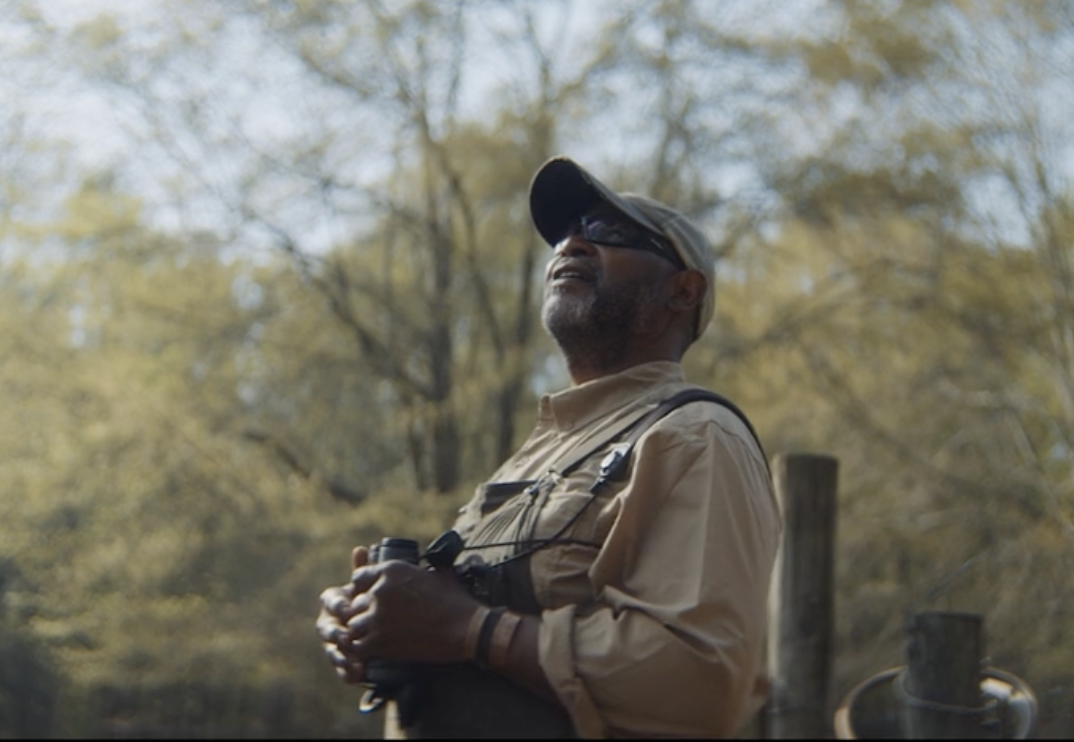
“Immersed in the songs of blue jays, yellow-throated warblers, and red-shouldered hawks on his forty-six-acre farm in rural South Carolina, acclaimed poet and ornithologist J. Drew Lanham exchanges calls with the birds that stop over at his home during their seasonal migrations. For Drew, these creatures are gods, transcendent beings who summon a response of reverence. Reverberating with sound, music, light, and ethereal cinematic expression, A Mystical Ornithology weaves a kinetic texture for the senses and invites you into a poetic evocation of the paradox of love and grief within the changing nature of the seasons.”
From the YouTube Trailer: “Emergence Magazine is an award-winning magazine and creative production studio that explores the threads connecting ecology, culture, and spirituality.”
Tip of the hat to Bev W. and Ruth L. for highlighting this wonderful film; I had to “read more” – and definitely to “hear more” of him. JDL surely speaks to those of us who struggle in our experience of the decline of the natural world. I heard his words in A Mystical Ornithology not as those of a Black Man, but as I began to read his other works, I began to understand a little bit, I think, of how being a Black ornithologist increased his love and concern for and sensitivity to, that world; it helps us, I sensed, to see us all as birds of this world. So I am doing as I was asked, to “share with someone else” – david p
| “I was only 15, I started trying to write memories of what I knew is disappearing.As if I was going to capture that life that we had lived,
and maybe uncover things that you thought you’d lost. And I spent a lot of time trying to be a bird. I still have dreams of being a bird. I call myself failed Icarus. You know the writing allows me to put myself in a space where I can imagine being a bird. And so it’s it’s a sort of flying that that I do now. You know, that’s a worthy barter I think for a boy who thought he could be a bird, to being a man who maybe occasionally has conversations with them. I like to think about the backyard and the farm as sort of an Underground Railroad where they can come, they can be safe they can refuel. And then on some Sunday evening, when it’s time again for them to make their way north, they can look at the drinking gourd, they can look at the star compass and they can go to the next safe space. I wanna be that person who gives safe space to those migrants.” – J. Drew Lanham in A Mystical Ornithology |
| From JDL’s “Creative Bio Sketch” (image & link inserted):
I am a wondering wander in love with nature and all the sensuality that falls softly in raindrops, risesriotously with each dawn chorus and whispers goodnight with Whip-poor-wills at dusk. I was born in 1965 and raised in the depths of the Sumter National Forest in a district called the Long Cane. Steven’s and Cheve’s Creeks feed into the Savannah River not far from the rolling piedmont landscape and the small family farm in Edgefield, South Carolina that nurtured me. I count three degrees from Clemson University as structured steps to learning and self-awareness. Honored as a Distinguished Alumni Professor and Alumni Master Teacher, my 20 years as faculty includes courses, research and outreach in woodland ecology, conservation biology, forest biodiversity, wildlife policy and conservation ornithology and more than forty graduate students mentored. I believe that it is critical that science move into action beyond the ivory tower. Surrounding oneself with those similarly impassioned is essential to move a mission forward. My conservation relationships as a board member with the South Carolina Wildlife Federation, South Carolina Audubon, American Birding Association, Aldo Leopold Foundation, BirdNote and the North American Association for Environmental Education are a means for putting conservation into practice. I count special kinships with Audubon/Toyota Together Green Fellows; fellow writers at Wildbranch Workshop in Craftsbury Common, Vermont and time at Knoll Farm’s Whole Thinking Community as valuable as any degree earned. 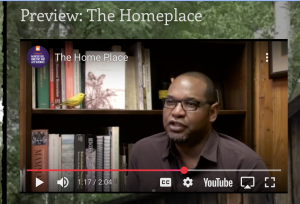 Click on image to go to YouTube Video I write to translate what my heart sees. I craft essays centered on place and a passion for wildness. I feel poetry and try to capture moments in words. In the evolution that now merges professional and personal into passion I desire time and space to define nature in ways that move others to love it in their own way. Coloring the conservation conversation is my mission. Words are my paint. I love watching all wild things but birds capture my heart. I envy their flighted freedom and uninhibited expression through song. I hunt autumn’s changing and spring’s regaining to meter my life’s winding in the web. I honor those whitetail and wild turkey that infrequently fall by my design as sustenance for body, mind and spirit. Drew’s Clemson Faculty Profile: |
9 Rules for the Black Birdwatcher
J. Drew Lanham in Orion, Oct 23, 2013.
“You are a rare bird, easy to see but invisible just the same.”
5. Black birds — any black birds — are your birds.
The often-overlooked blackbirds, family Icteridae, are declining across the board. Then there are the other birds that just happen to be black — crows and their kin are among the smartest things with feathers and wings. They’re largely ignored because of their ubiquity and often persecuted because of stereotype and misunderstanding. Sounds like profiling to me.
Our Mission:  Loving the Land
J. Drew Lanham in Clemson World, May 5, 2015.
…I remember my first visits to the Clemson Experimental Forest when I re-found my wild heart as a zoology undergraduate. It was a new and wonderful world in which to wander. My nature-loving friends and I would marvel over the wetlands. We walked under tulip poplars that towered above us and soaked in the birdsong at dawn and frog chorus at dusk. We mucked knee-deep into newly made beaver marsh, turned stones in Wildcat Creek, spying on salamanders, and looked skyward to watch broad-winged hawks soaring above it all. I’ve sat in vain on a spring morning waiting for a woods-wary wild turkey to come to my call on Bombing Range Road and sat high in a stand on Fant’s Grove hoping a white-tail buck would make a mistake.
In those wanderings I’ve often felt more like a child than a college student or professor. Edgefield was my nurturing paradise, the wild place that set the stage for what was to come. Some 30 years since I left that home place and made the northwest corner of the state home, I’m in a place that wraps its wooded arms around me.