 Paid Advertisement in Chronicle Herald Mar 7, 2026.
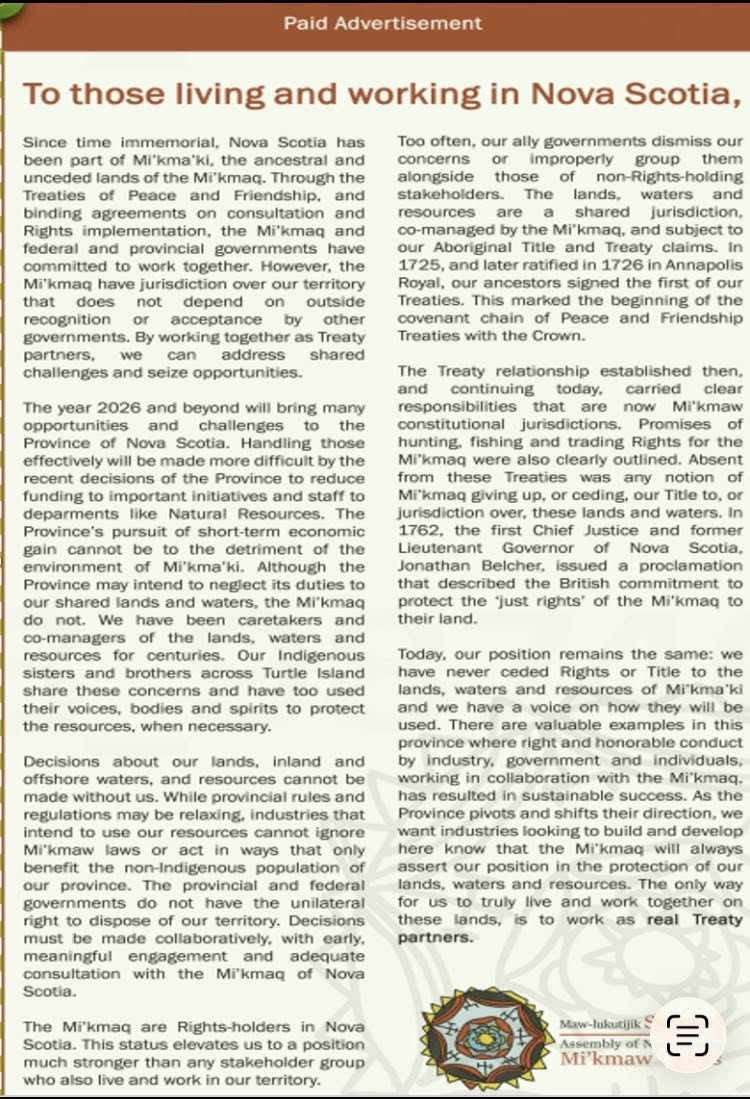
To those living and working in Nova Scotia,
from Maw-lukutilik Saqmag/Assembly of Nova Scotia Mi’kmaw Chiefs
Since time immemorial, Nova Scotia has been part of Mi’kma’ki, the ancestral and unceded lands of the Mi’kmaq. Through the Treaties of Peace and Friendship, and binding agreements on consultation and Rights implementation, the Mi’kmaq and federal and provincial goverments have committed to work together. However, the Mi’kmaq have jurisdiction over our territory that does not depend on outside
recognition or acceptance by other governments. By working together as Treaty partners, we can address sharedchallenges and seize opportunities.
The year 2026 and beyond will bring many opportunities and challenges to the
Province of Nova Scotia. Handling those effectively will be made more difficult by the recent decisions of the Province to reduce funding to important initiatives and staff to deparments like Natural Resources. The Province’s pursuit of short-term economic gain cannot be to the detriment of the environment of Mikma’ki. Although the Province may intend to neglect its duties to our shared lands and waters, the Mikmaq do not. We have been caretakers and co-managers of the lands, waters and resources for centuries. Our Indigenous sisters and brothers across Turtle Island share these concerns and have too used their voices, bodies and spirits to protect the resources, when necessary.
Decisions about our lands, inland and offshore waters, and resources cannot be made without us. While provincial rules and regulations may be relaxing, industries that intend to use our resources cannot ignore Mi’kmaw laws or act in ways that only benefit the non-Indigenous population of our province. The provincial and federal governments do not have the unilateral right to dispose of our territory. Decisions must be made collaboratively, with early. meaningful engagement and adequate
consultation with the Mikmaq of Nova Scotia.
The Mikmaq are Rights-holders in Nova Scotia. This status elevates us to a position much stronger than any stakeholder group who also live and work in our territory. Too often, our ally governments dismiss our concerns or improperly group them alongside those of
non-Rights-holding stakeholders. The lands, waters and resources are a shared jurisdiction, co-managed by the Mikmaq, and subject to our Aboriginal Title and Treaty claims. In 1725, and later ratified in 1726 in Annapolis Royal, our ancestors signed the first of our Treaties. This marked the beginning of the covenant chain of Peace and Friendship Treaties with the Crown.
The Treaty relationship established then, and continuing today, carried clear
responsibilities that are now Mikmaw constitutional jurisdictions. Promises of
hunting, fishing and trading Rights for the Mikmaq were also clearly outlined. Absent from these Treaties was any notion of Mi’kmaq giving up, or ceding, our Title to, or jurisdiction over, these lands and waters. In 1762, the first Chief Justice and former Lieutenant Governor
of Nova Scotia, Jonathan Belcher, issued a proclamation that described the British commitment to protect the “just rights’ of the Mi’kmaq to their land.
Today, our position remains the same: we have never ceded Rights or Title to the lands, waters and resources of Mikma’ki and we have a voice on how they will be used. There are valuable examples in this province where right and honorable conduct by industry, government and individuals, working in collaboration with the Mikmaq. has resulted in sustainable success. As the Province pivots and shifts their direction, we want industries looking to build and develop here know that the Mikmaq will always assert our position in the protection of our lands, waters and resources. The only way for us to truly live and work together on these lands, is to work as real Treaty partners.