Land plan due for update
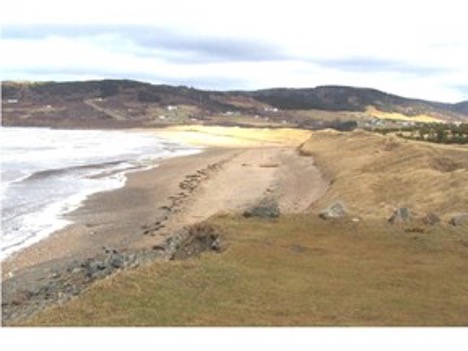
West Mabou Beach Provincial Park was designated a protected park in 2001. Yet golf course developer Cabot twice attempted to plan an 18-hole golf course on the site, only to be rejected by the provincial government in 2018 and 2023. Premier Tim Houston announced last year that another proposal from Cabot wouldn’t be going ahead. Photo by IAN NATHANSON
With a 2013 plan now outdated and no permanent protections in place, a single government could strip parkland for development, as the Progressive Conservatives recently considered for a Cape Breton golf course.
It’s time to lock the door on four-year fragility
In August 2013, Nova Scotia did something remarkable. After years of debate and eighteen open houses drawing over 1,300 participants, the province released Our Parks and Protected Areas: A Plan for Nova Scotia.
For those of us who sat in those community halls — sharing stories of favourite lakes, family camp spots and trails our parents walked — it felt like a victory. The plan was our collective voice turned into law. It protected wild places from the Highlands to the South Shore.
One election can erase it all
But here is what keeps me up at night: that same voice can be erased by a single piece of legislation, passed in a single term, by a single government.
Let me tell you why this matters to the average Nova Scotian. You don’t need to be an environmental scientist like me to feel the loss. You just need to remember the first time you took your child fishing at a hidden brook, or the quiet hush of hemlocks in an old valley. Those moments aren’t abstractions — they are the raw material of a life well lived in this province.
Golf course should have been warning
Right now, nothing stops a future government from taking that brook, that valley or that campground and handing it over to a developer. The current government considered changing the boundary of a park in Cape Breton precisely for a golf course. The proposal stalled, but the message was clear: our protected areas are only as permanent as the current government’s patience.
Why can’t we put a mechanism in place that protects parkland beyond a single four-year mandate? Why should a family in Yarmouth or Antigonish have to wonder if the woods behind their cottage will be clearcut after the next election?
The 2013 plan was built on public input that is 13 years old. Kids who were in diapers during those consultations are now teenagers who deserve their own say. Climate resilience, biodiversity collapse and simply having a quiet place to walk look vastly different in 2026.
Fake protection, real loopholes
We are watching the province struggle to meet updated land protection targets — 15 per cent by 2026, 20 per cent by 2030. Two-thirds of Nova Scotians want more protection, not less. Yet the government is reportedly considering other effective area-based conservation measures (OECMs) — loopholes critics call fake protected areas.
As conservation groups have noted, these OECMs often consist of steep slopes or forestry buffers already unsuitable for industry, not the high-value ecosystems or beloved recreation sites Nova Scotians expect to see protected. And the Progressive Conservatives recently voted down a motion that contained no new measures, only a promise not to weaken current coastal protections. Their refusal to make even that pledge speaks volumes.
Memories deserve more
Ask yourself: If the 2013 plan is still the good document we claim it is, why are we fighting to keep its promises from slipping away?
The average Nova Scotian doesn’t care about political targets. They care about knowing that the place where they proposed to their partner or taught their kid to swim or scattered a parent’s ashes will still be there in 30 years. That is not a radical ask. That is the bare minimum of responsible governance.
Reopen blueprint
We owe the architects of the 2013 plan credit; they built a solid foundation. But a house built in 2013 needs a new inspection in 2026. We need a full revisiting of the plan, not just targeted consultations on specific parcels. And we urgently need binding, cross-partisan legislation that prevents any single government from casually stripping away protected status. Real protection means real places, not creative accounting by including fake protected areas.
Because a park should not be one election away from becoming a parking lot. And a legacy should not be one vote away from the shredder.
It’s time to reopen the blueprint and then lock the door behind us, and demand nothing less than genuine, permanent, meaningful protection for the wild places that make Nova Scotia home.
——
Geoffrey V. Hurley is a retired former environmental consultant who lives in Dartmouth, N.S. He can be reached at hurleyenvironment@gmail.com.