This page is referenced under In the News – Democracy Issues
Writes Celes Davar in a FB post:
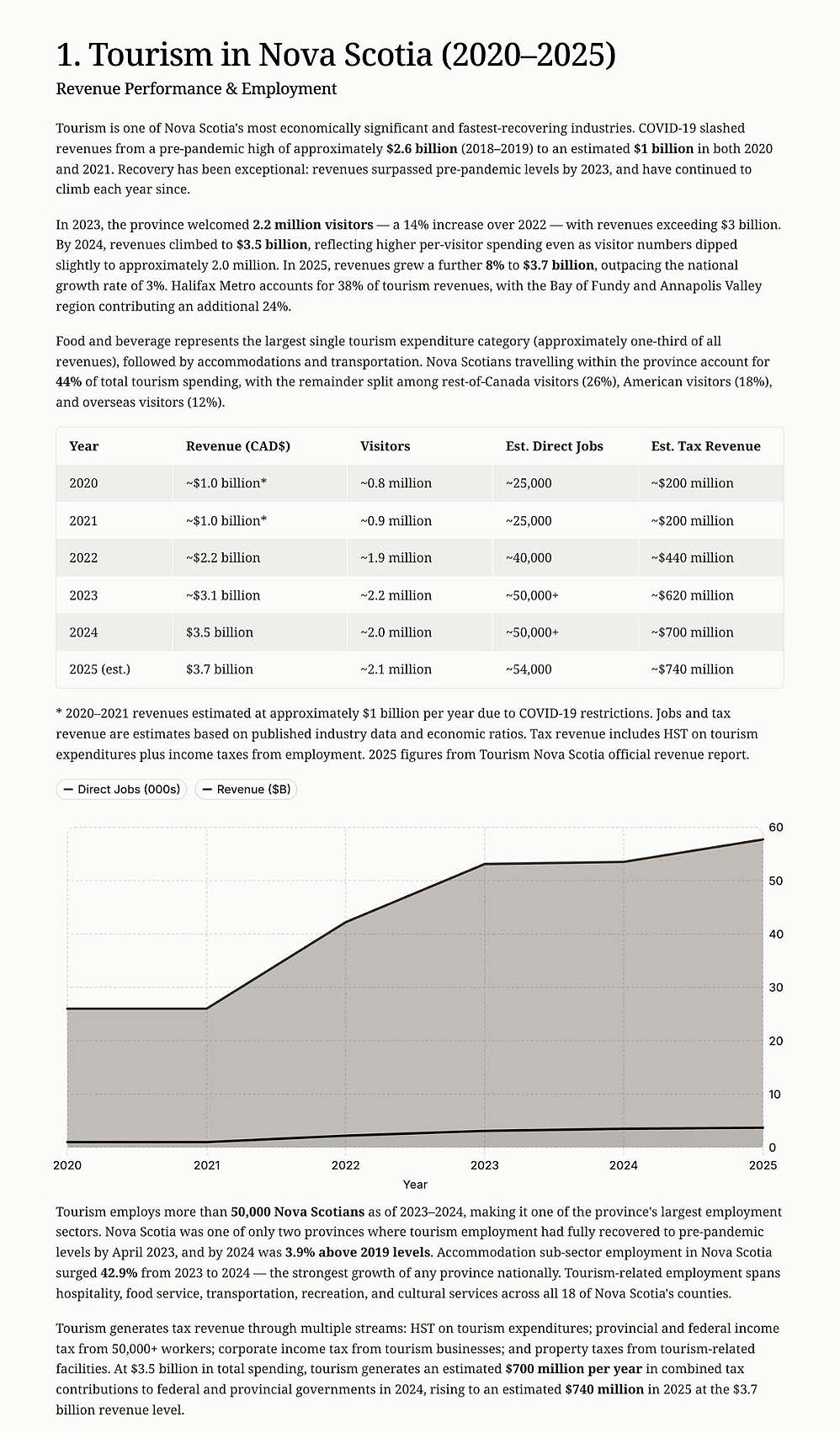
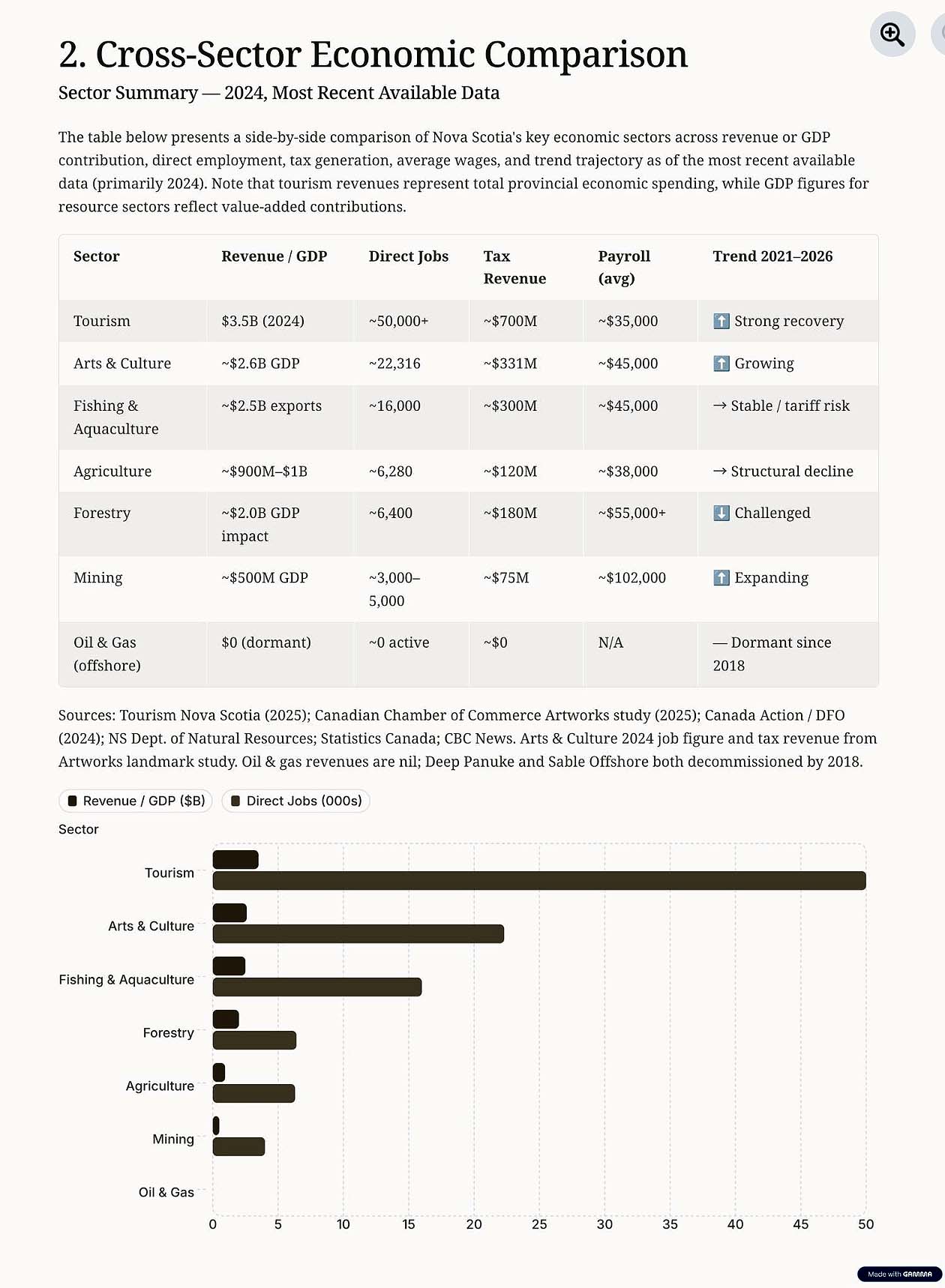
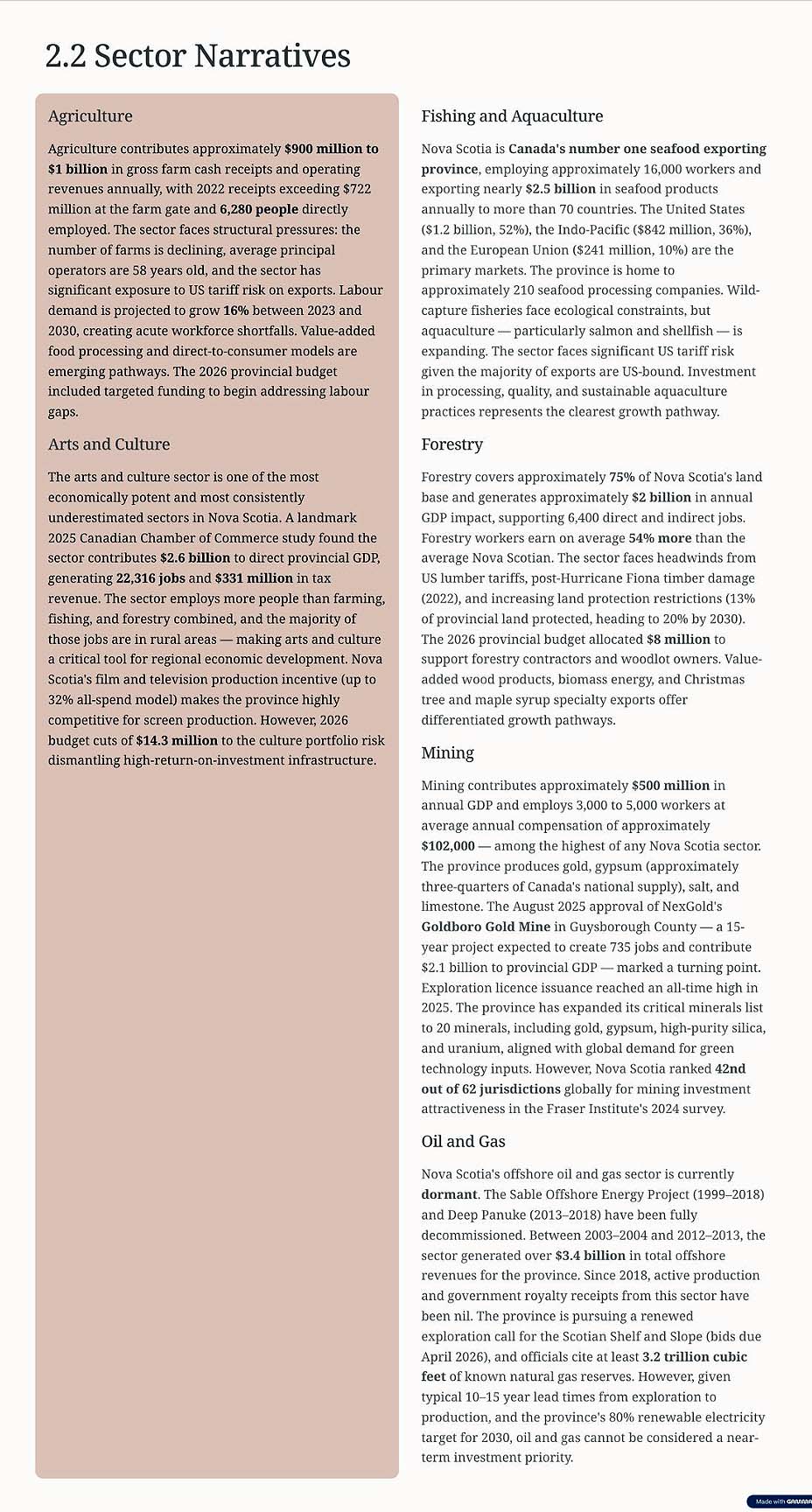
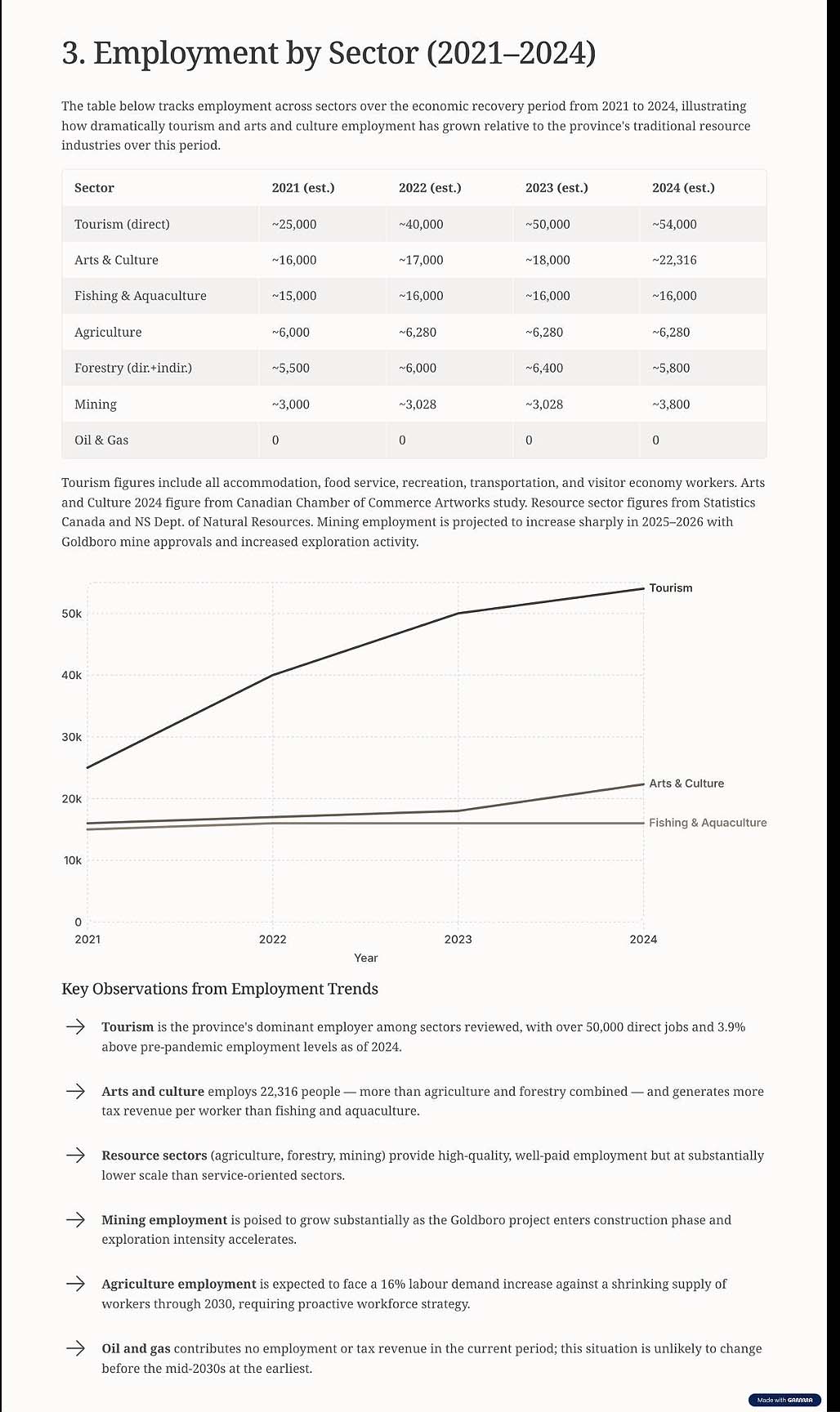
| Share,… tell your friends and ask them to tell all their friends… ✍️Write your MLA and ask for this budget to be voted down. If you or someone you know would like to speak at Public Bills, ☎️call the Nova Scotia Legislature office at 902 424 8941 to be added to the list of presenters. Don’t want to speak but have your say? Write ✍️ the Legislative office to have your letter distributed to the Public Bills committee, cc your MLA and the cabinet minister responsible. ✍️Legc.office@novascotia.ca Check the NS Legislature website for Public Bills updates.___________________________________ Highlights from my letter ( have not included my detailed substantiation under each of these points, which I have provided in my letter to the Public Bills Committee):1. The false narrative for a fiscal crisis does not warrant the systematic dismantling of the Wildlife Branch and Environment and Climate Change staff. This is a deliberate act to remove science and evidence and environmental monitoring input into resource development activities that the Premier and Cabinet are proposing in mining for critical minerals, uranium, fracking, oil and gas exploration, and accelerated logging of our forests.2. This budget is very limited in its scope for identifying other investments into other sectors that could provide new revenues, sustainable growth, and involve rural and small businesses in a creative way.3. Targeting conservation zones to tax on private lands is over-reach of my rights as a landowner, and woodlot manager. 4. Tourism as a high performing Sector deserves more investment. This is where I spent a fair bit of time analyzing data and sharing it within my email because this is the sector that is my area of expertise. One of the interesting things I learned from my research is that Tourism has become Nova Scotia’s largest employer among these four sectors by a wide margin. With approximately 54,000 estimated employees in 2024 — compared to roughly 6,400 in forestry, 3,028 in mining, and fewer than 400 in oil and gas — tourism provides employment for approximately 5.5 times as many workers as the other three sectors combined. This employment is distributed across the province, benefiting coastal communities, the Annapolis Valley, Cape Breton, and Halifax Metro equally. Revenue-wise, the comparison is even more striking. Tourism’s $3.5B in revenues (2024) exceeds the combined GDP impact of forestry (~$1.8B), mining (~$435M), and oil & gas (~negligible) by nearly 75%. The tourism sector also generates substantially more government tax revenue than the resource sectors, both because tourism is a high-volume consumer-facing activity subject to HST, and because it employs a large workforce that pays income and payroll taxes. This table compares all four sectors across revenue/GDP impact, employment, and provincial tax contribution over the study period. Note that ‘Revenue’ for tourism represents total tourism spending (a broader measure than GDP), while Forestry, Mining, and Oil & Gas figures represent GDP impact or value-add.
|

———
NSFM: A little bit about Celes Davar
On January 26, 2025, Celes was given the IMPACT Sustainable Tourism award in Victoria, which celebrates individuals and organizations who inspire and lead in creating positive impacts for communities, the economy, and the environment.
From the Award Statement:
“Celes Davar, an experiential tourism operator, is recognized for his outstanding contributions to sustainable tourism.
“As the President of Earth Rhythms, he offers creative, immersive experiences in remote locations along the Bay of Fundy and in the Annapolis Valley region.
“Working with Mi’kmaw, Acadian, and local communities, Celes provides enriching storytelling and a deep sense of place through tours enriched with nutritious food, cultural traditions, and themes of climate change, art, live music, and nature. His work is a testament to tourism as a force for good, communicated through well-crafted visitor experiences.”
And a follow-up post by Celes D (Mar 15)
We are at a moment in time in Nova Scotia. Do we believe what the Premier is saying, or is there much more that is not being shared, that we need to understand about our current economy, place, people, and cultures that can be celebrated? And, if so, where should the investment into our future be?
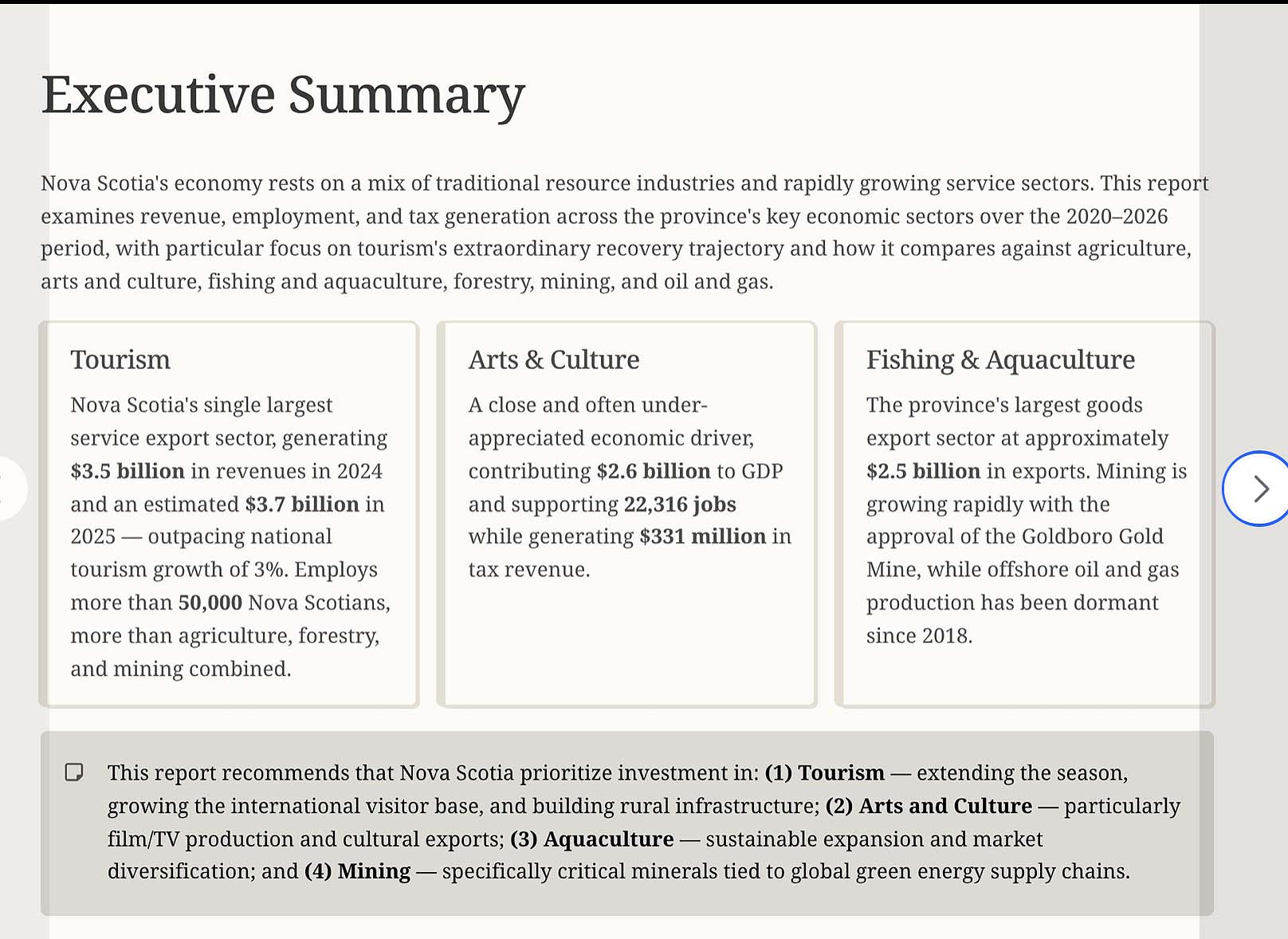
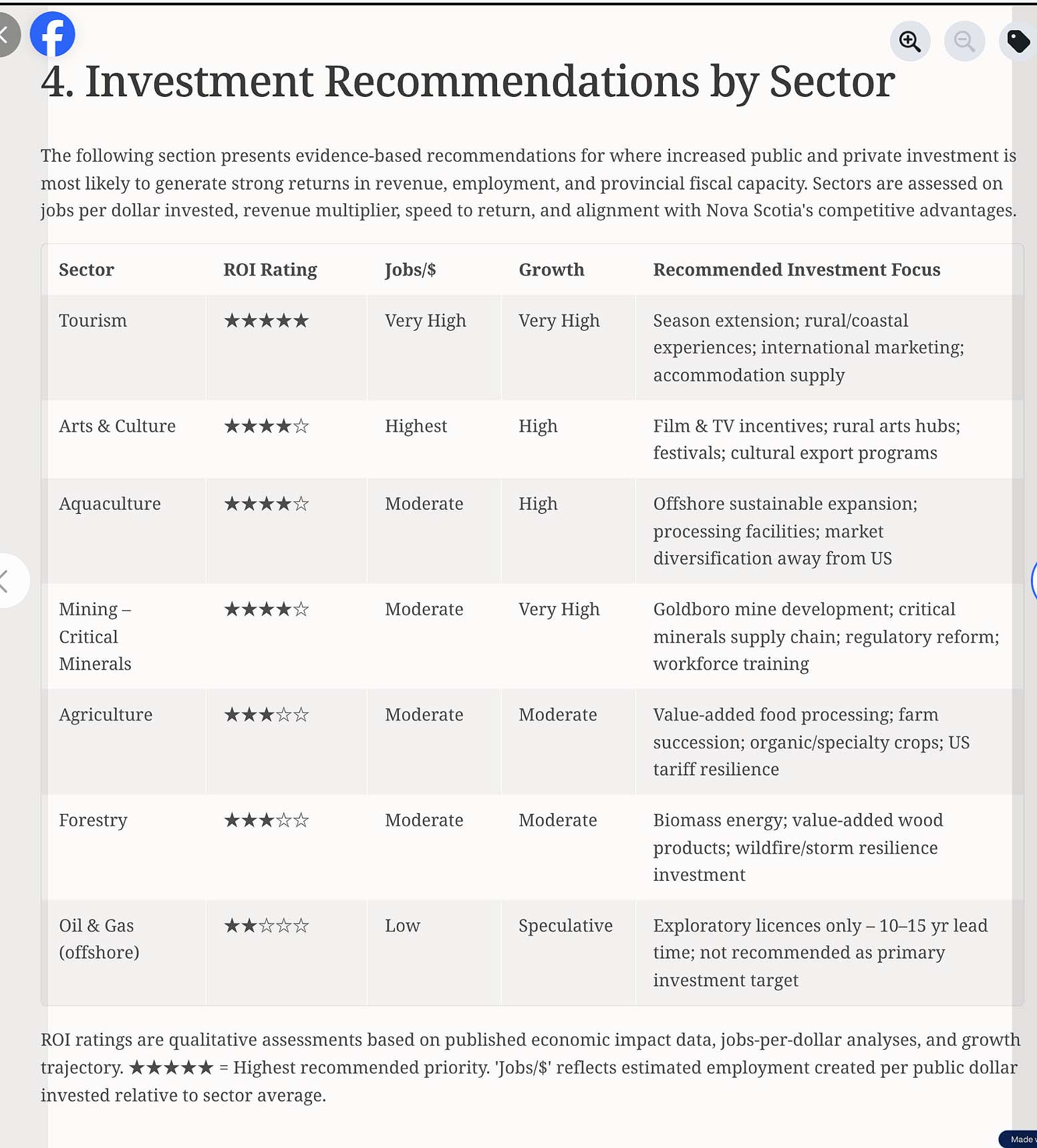
So, today, using Claude AI, I asked a question….””Prepare a summary of the annual revenues, jobs, and taxes generated from tourism in Nova Scotia for the past five years, with tables and figures, comparing tourism against revenues, jobs, and taxes from agriculture, arts, culture, mining, forestry, aquaculture, and oil and gas revenues in Nova Scotia, up to 2026. Recommend sectors where increased investment would provide good ROI and growth.”
While this is only small bit of enquiry, and much of it needs to be validated, it was interesting what Claude AI was able to scrape together from various Nova Scotia government websites, information, reports, and studies.
Here is the really important nugget at the end of the report that Claude AI generated…
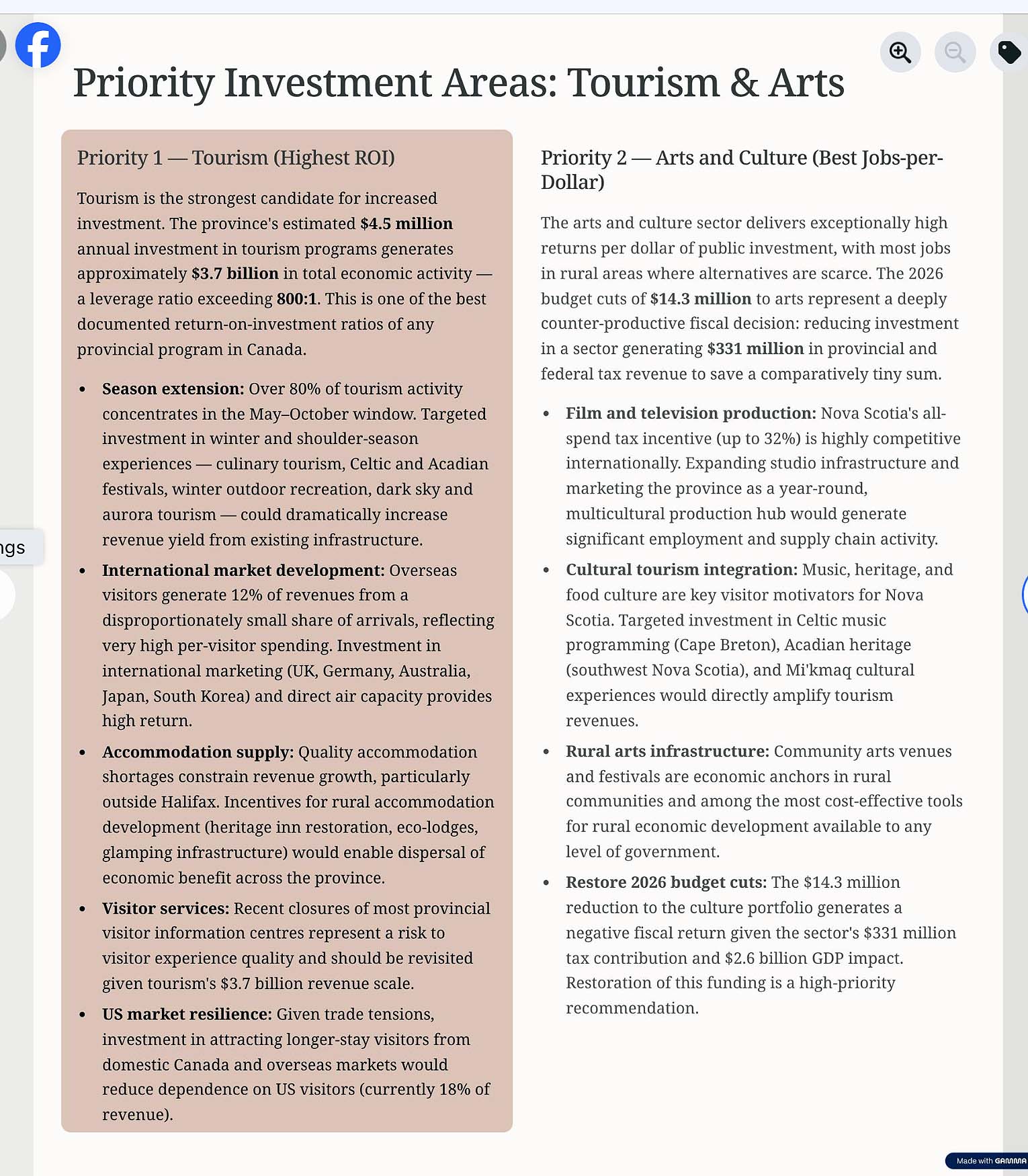
“Nova Scotia’s most powerful economic advantage is the combination of its natural environment, cultural richness, and seafood reputation — all of which underpin tourism, arts, and aquaculture simultaneously. Investments that reinforce the interconnection of these three sectors — for example, culinary tourism that showcases local seafood while being animated by local musicians and artists — create multiplier effects that individual sector investments alone cannot achieve. Protecting and growing all three in concert is the province’s single most strategic economic imperative for the remainder of this decade.”
Nova Scotia’s economic future is most effectively served by a diversified investment strategy that leverages its natural environment, cultural distinctiveness, and geographic position.
The key conclusions of this report are:
1. Tourism is Nova Scotia’s standout high-growth, high-employment, high-tax-revenue sector. Its recovery from COVID-19 has been exceptional, and its $3.7 billion 2025 revenue trajectory materially exceeds the pre-pandemic $4 billion target that the Ivany Commission set for 2024. Investment in season extension, infrastructure, and international markets offers the province’s best return on public dollars.
2. Arts and culture is dramatically undervalued as an economic sector. At $2.6 billion in GDP, 22,316 jobs, and $331 million in tax revenue, it is a larger economic contributor than most Nova Scotians realize — and 2026 budget cuts risk destroying high-multiplier economic infrastructure to achieve comparatively small fiscal savings.
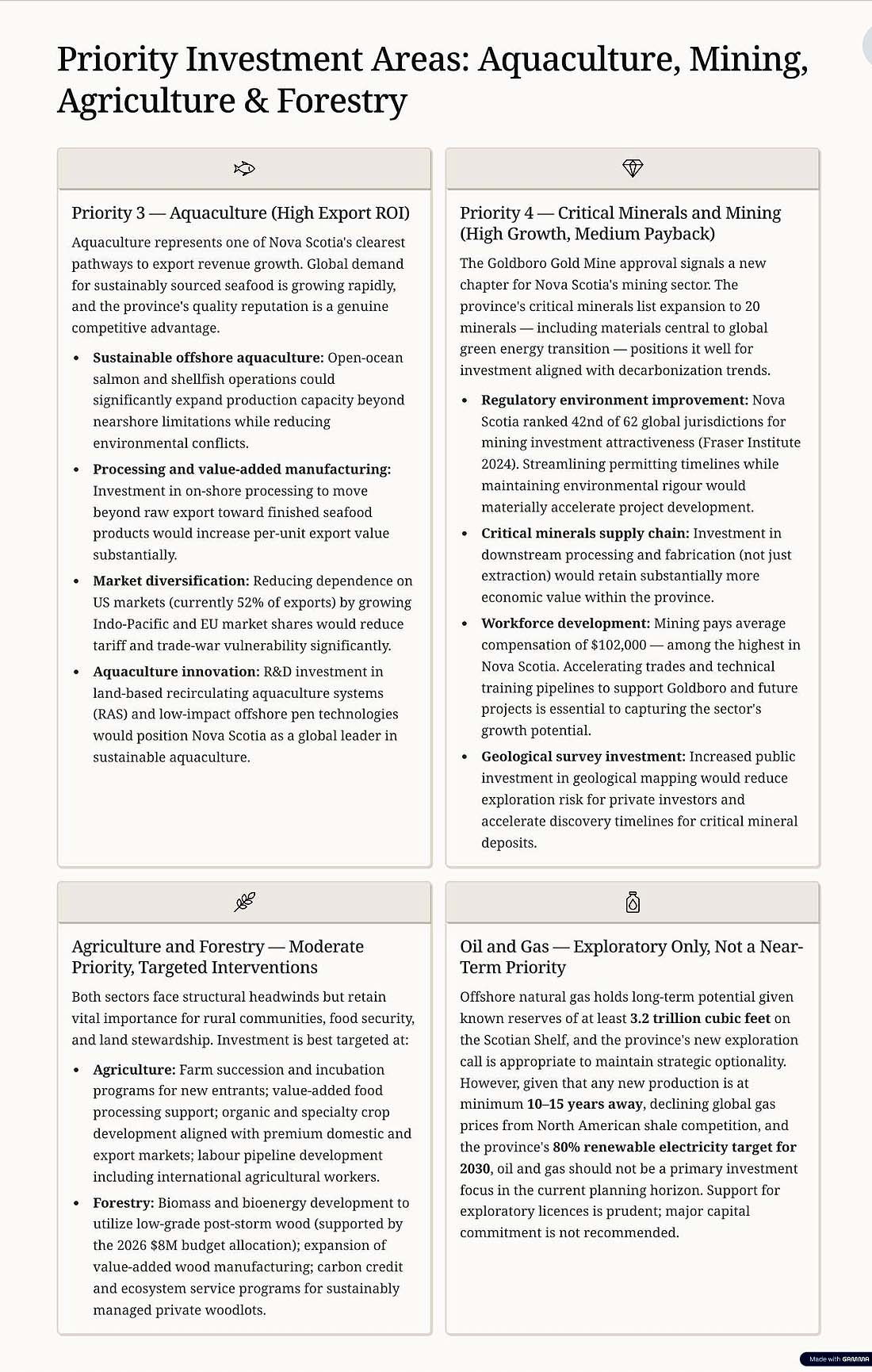
3. Fishing and aquaculture sustains 16,000 workers and $2.5 billion in exports but faces US tariff exposure and ecological constraints on wild-capture growth. Strategic market diversification and expansion of sustainable aquaculture is the clearest growth path.
4. Mining is entering a transformational period. The Goldboro mine and the critical minerals strategy position Nova Scotia well within global green-energy supply chains. The investment climate needs regulatory reform to fully capture this opportunity.
5. Agriculture and forestry are mature sectors facing labour and structural challenges. Targeted investment in succession planning, value-added processing, and sustainable practices is warranted, but these sectors are unlikely to be primary growth drivers at the scale of tourism, arts, or mining.
6. Oil and gas is dormant and a long-term speculative prospect. The province’s offshore has significant geological potential, but combination of long development timelines, energy transition pressures, and existing resource sector competition makes this a low-priority investment target for the 2026–2031 planning horizon.
So, how do we deal with a government that does not want to invest more into tourism and arts and culture?
Let’s figure this out Nova Scotians! Please share in your own networks, do your own analysis, and let’s talk with each other and nurture momentum towards a thrivable future that all of the government reports and studies clearly indicate is within our reach.
Screenshot
Screenshot
Screenshot
Screenshot
Screenshot
Screenshot
Screenshot
Screenshot
Screenshot