DRAFTING
How are these terms defined and used scientifically them in relation to global processes such as climate change and biodiversity loss or change? What are the key differences between them?
Chat GPT weighs in: I have asked these questions of Chat GPT but find some inconsistencies in the responses particularly in regard to the differences between thresholds and tipping points. Below are portions of GPT responses that I find most helpful.
These three terms are closely related, but they answer different questions about how Earth-system processes behave under increasing human pressure. The distinction is particularly important when discussing climate change, biodiversity loss, land-system change, freshwater use, and other planetary processes…There is considerable overlap in everyday usage, however, so the terms are sometimes used inconsistently.
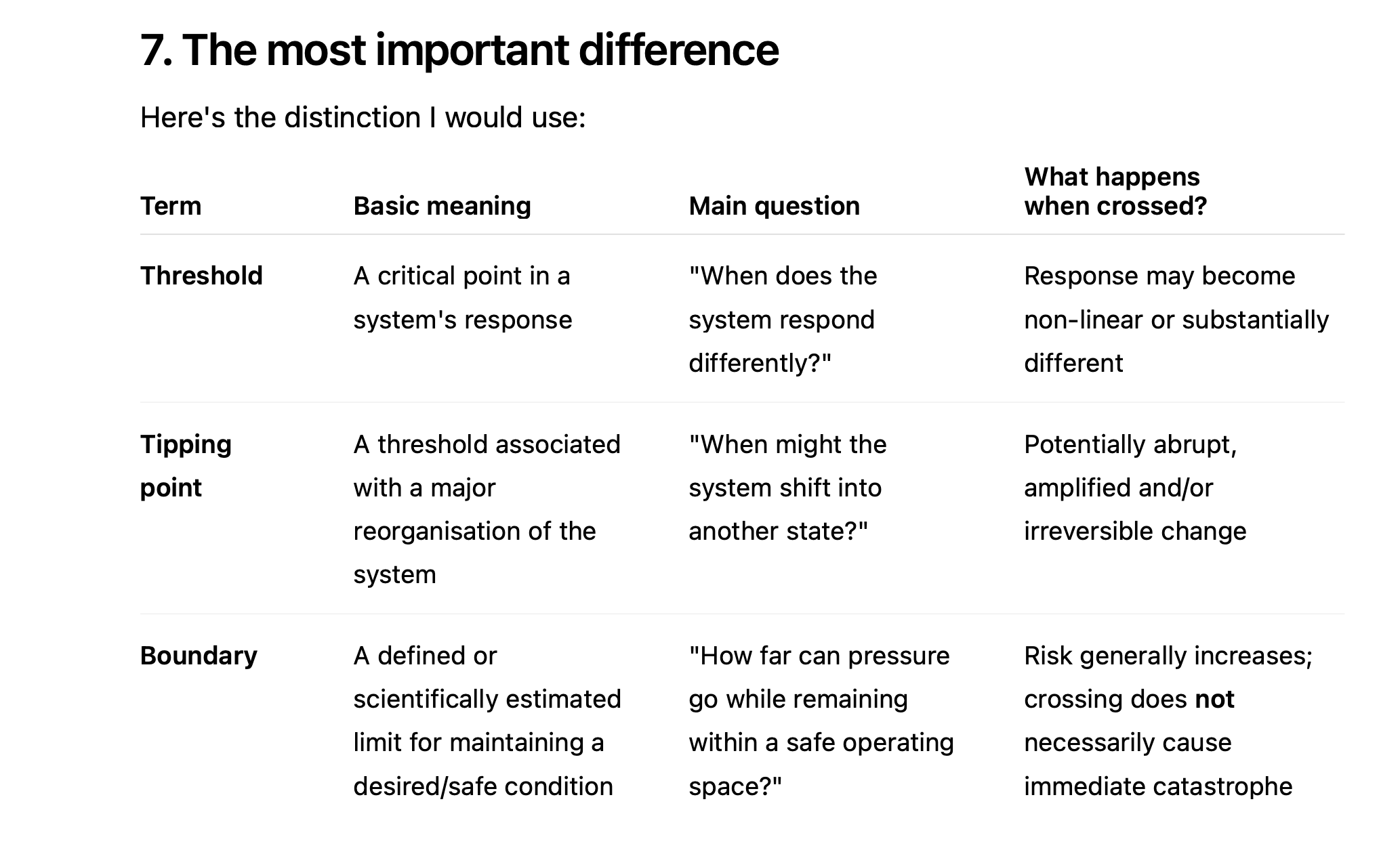
Threshold:
A critical level of a pressure or state variable at which a system’s response changes substantially, often becoming non-linear.
Tipping point:
A critical threshold beyond which an Earth-system component can reorganise into a
substantially different state, potentially abruptly and/or irreversibly.
Planetary boundary:
A scientifically informed limit defining a relatively safe operating space for humanity, intended to reduce the risk of destabilising critical Earth-system processes.
The shortest way to remember the difference
Threshold = critical point in behaviour.
Tipping point = critical point leading to a regime shift.
Boundary = limit we should stay within to avoid unacceptable risk.