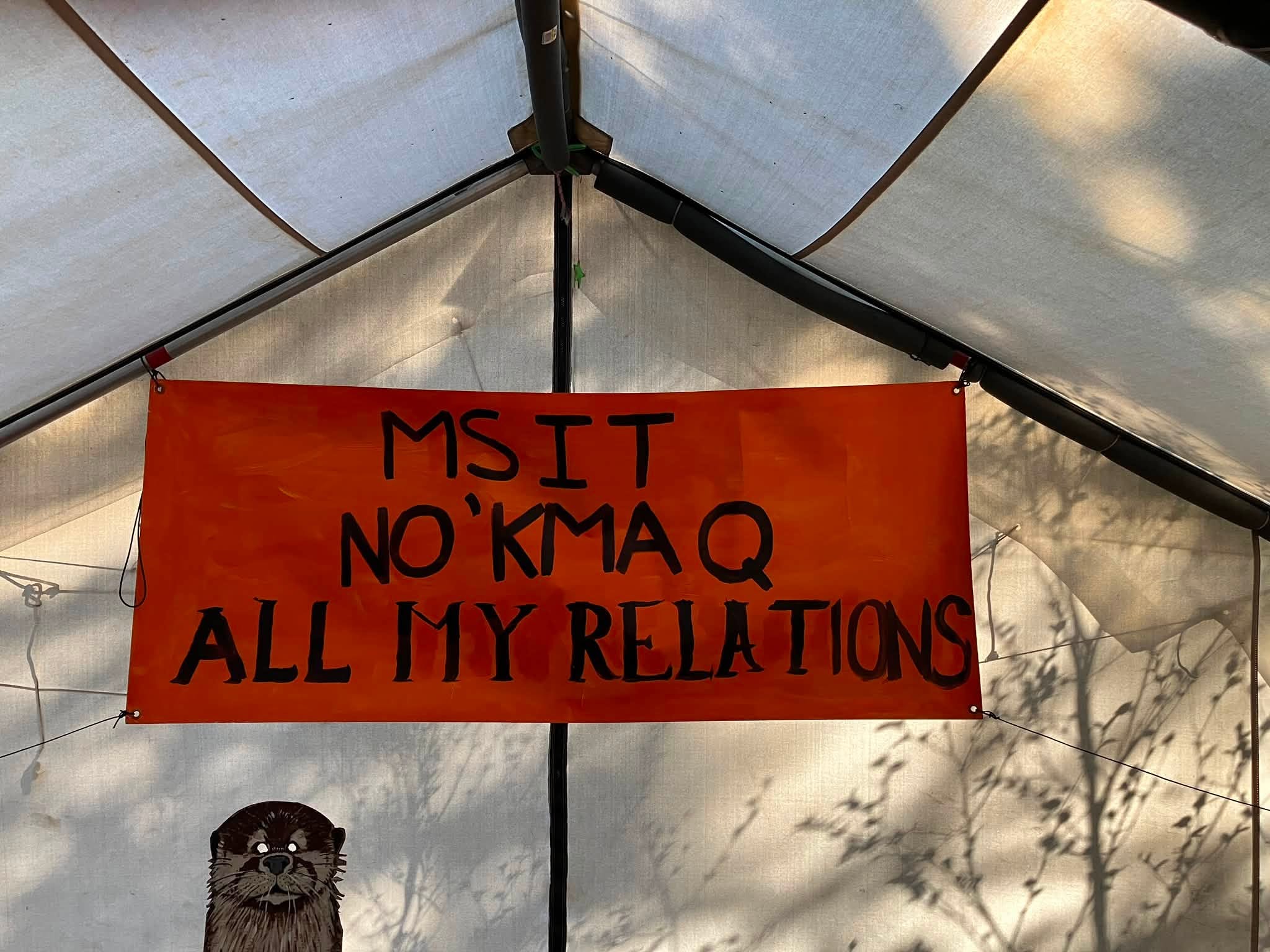
Wrote Nina Newington yesterday, Day 245 of Camp Now:
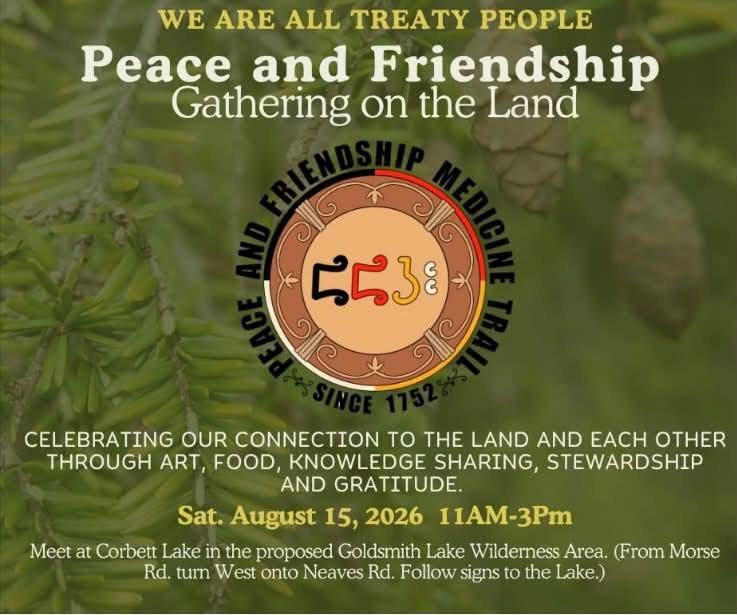
Sat Aug 15, 2026: A Peace and Friendship Gathering at Corbett Lake in the proposed Goldsmith Lake Wilderness Area. If you’re looking for some hope, come and join us.
Click on image for a larger version
The climate and nature catastrophe that is bearing down on us is the direct result of an economic system rooted in a particular idea, the idea that we humans are separate from nature and can own, extract from, and abuse the Earth, as we wish.
Can we change our collective mind?
‘We are not alone, we’re not supreme, and we have responsibilities,’ said Robert McFarlane on CBC Radio’s ‘Ideas’ this evening. The episode, ‘How the Anthropocene is Changing the Elements – and Us’, was originally aired on Oct 9, 2024.
He spoke of ‘the disenchantment of water.’ The way instrumentalism – treating the earth as something that exists for us to use – has reduced everything to extraction, consumption, disposal. A dead world.
He spoke of the need for ‘A counter-desecration phrasebook’ and quoted Robin Wall Kimmerer’s call for ‘Grammars of animism.’
He talked with delight about recent moves to grant legal personhood to rivers. He has begun to say ‘Rivers who…’ instead of ‘Rivers that…’
Language matters. Languages matter. We are losing languages in the same way that we are losing species. Macfarlane quotes Wade Davis: ‘Every language is an old-growth forest of the mind.’ It is appropriate that, in the most recent budget, our provincial government, with its exclusive dedication to resource extraction, tried to slash funding for Mi’kmaw language programs.
I learned recently that Gaelic, like Mi’kmaw, is a verb-based language. English, by contrast is noun-based. In verb-based languages, everything exists in relationship to everything else. Noun-based languages tend to see objects, defined by their separation from all the other objects.
‘What would be the expected system of a worldview arising from a realization of the deep interconnectedness of all life?’ That’s a question Jeremy Lent poses in his new book, ‘Ecocivilization: making a world that works for all.’
Jeremy Lent is from Britain originally, as am I. Traces remain there of older land-based cultures rooted in the understanding of interconnectedness, especially among those who still speak Welsh and Gaelic, but nothing compared to the riches to be found in Canada. In spite of the sustained, genocidal efforts of colonial powers, mainly Britain, First Nations across Turtle Island have survived and succeeded in preserving cultures, ceremonies and, essentially, their languages.
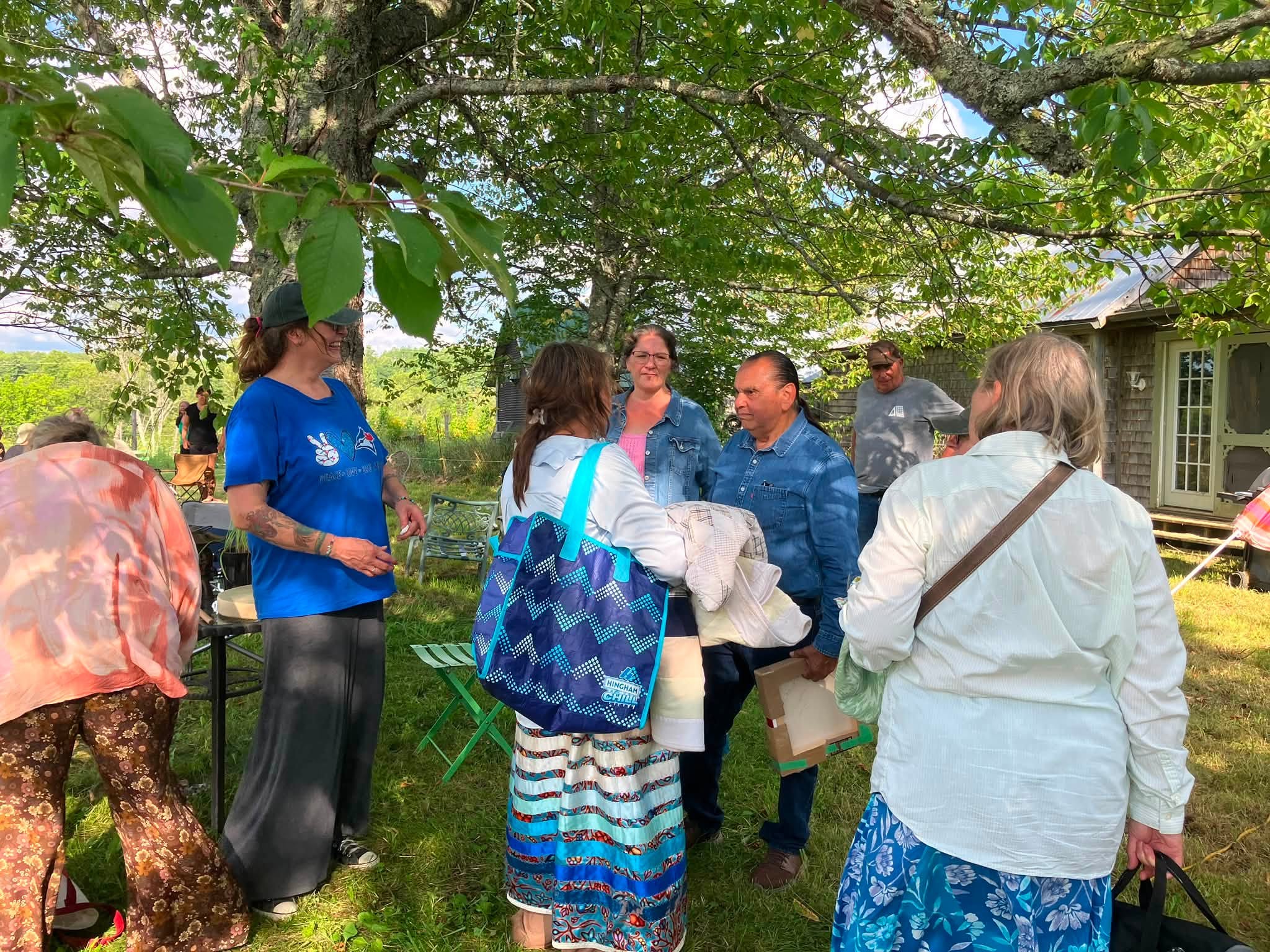 Those of us settlers here in Mi’kma’ki who are trying to imagine what a system rooted in the understanding that we are a part of nature might look like are being graciously invited to learn by L’nu, the original people of this land. The Peace and Friendship Treaties call for all of us to care for the lands and waters. Last weekend saw a beautiful gathering of 30 or so people, L’nu and settlers together, on private land in Hants County, land which is now part of the Peace and Friendship Medicine Trail. We learned some history, ate and laughed together, hugged in a Ceremony of Reconciliation.
This coming Saturday, August 15, from 11-3, there will be another Peace and Friendship Medicine Trail event, this time on the shore of Corbett Lake, a few hundred meters past the Camp NOW Blackfly Shelter. The plan? To celebrate ‘our connection to the land and each other through art, food, knowledge sharing, stewardship and gratitude.’
If you’re looking for some hope, come and join us. (See image at top of this post for details).
As Sadie Beaton put it in Episode 5 of Stephanie Domet’s podcast, Culture is Critical, ‘I believe that the Peace and Friendship Treaties are a blueprint that can show us a way of relating to each other and the land, to our ancestors and descendants, to the lands and waters, in all these different directions. It’s a blueprint that we already have.(…) A big piece of it too is about building relationships and maybe that’s a beginning baby step. Lots of people are meeting each other differently for the first time, learning what we might be able to do together.’