Reproduced from Nature NS Facebook Post May 31, 2026.
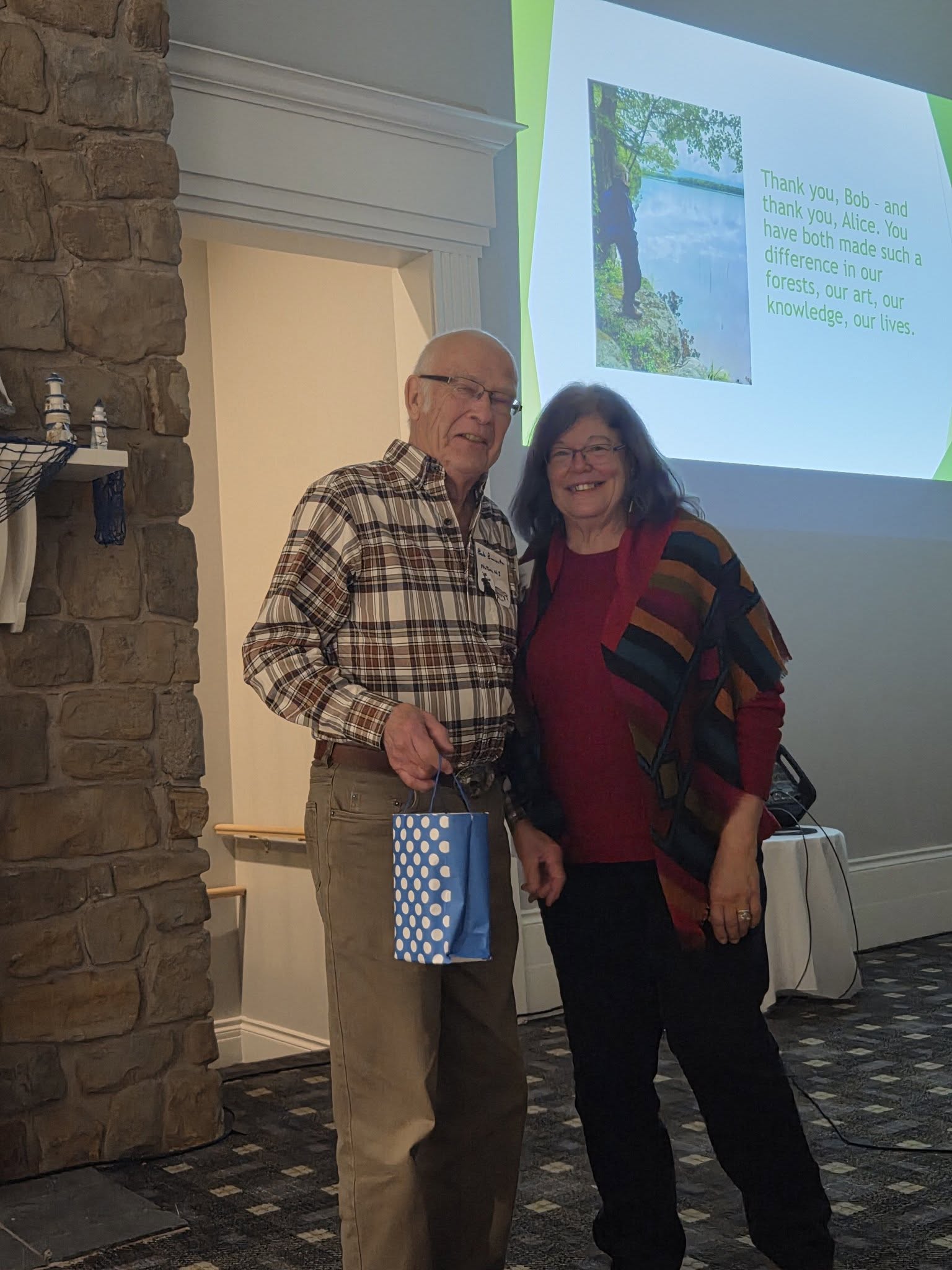 This weekend’s AGM is a special one, not just because we are celebrating several wins for nature but also because it marked the retirement of our longest ever serving President, the infamous Bob Bancroft.
On Saturday, we heard from members, biologists, journalists, and other Nova Scotians speaking to the impact Bob has had on the field of conservation in Nova Scotia. Long time nature network member Geoff Hurley had this to say at Bob’s retirement:
“If you’ve ever walked a hemlock glen in the Annapolis Valley or puzzled over a mysterious track along a tidal marsh, you’ve likely felt Bob Bancroft’s quiet influence. For four decades, Bob was a biologist for the Department of Natural Resources. But retirement didn’t soften his voice—it sharpened it.
For me as a former fisheries and environmental biologist, corporate executive and independent consultant, and currently in retirement as a journalist, Bob Bancroft has long been a touchstone: the rare figure whose encyclopedic knowledge of the natural world is matched only by an unbending ethical spine—a role model not just in what he knows, but in how he stands.
The activist octogenarian
Now eighty, Bob hasn’t drifted toward gentle birdwatching. He’s become the province’s most persistent thorn in the side of industrial forestry and open-pit mining. Since stepping away from government, he’s stood in the cold rain at blockade sites, submitted expert affidavits in court challenges, and testified against clearcutting permits with the same steady ferocity he once used to defend a vernal pool. When a proposed mine threatened sensitive watershed, Bob was there—not as a relic, but as a litigant. When clear-cuts marched too close to remaining old growth, his legal interventions forced regulators to slow down and reconsider.
The voice on the radio
For decades, Nova Scotians have also known Bob as the voice of reason on CBC Maritime Noon call-in program. Whether the topic was a mysterious animal track in a caller’s backyard or a contentious forestry practice, Bob answered with patience, warmth, and an educator’s gift. He never made anyone feel foolish for asking—only empowered to look closer at the natural world outside their kitchen window. That phone-in line became a classroom without walls, and Bob its most beloved professor.
The writer and the artist
His written legacy runs just as deep. Through his many articles in Saltscapes Magazine, Bob brought the province’s wild places into cozy kitchens and waiting rooms, turning curious readers into quiet stewards with every lyrical field note.
For years, Bob also found a rare collaborator in acclaimed artist Alice Reed, whose brush gave luminous form to the landscapes he fought to protect—together, science and art made the case for conservation in ways neither could alone.
The price of speaking up
His post-retirement activism has cost him. He’s been dismissed as a “radical” by industry spokespeople, yet his arguments remain grounded in decades of field data. He knows that a healthy forest isn’t a timber farm, and that a mine’s promise of jobs rarely outlasts the poisoned runoff. Bob turned to the law as a new kind of field guide, walking judges through ecological realities that PowerPoint slides obscure.
Leading where it matters
Beyond the courtrooms, protest lines, radio studios, gallery walls, and magazine pages, Bob has led where leadership matters most. He has served as president of the Nova Scotia Wild Flora Society, championed Coastal Action, and been a guiding hand for the Nova Scotia Nature Trust. As chair of the Mersey Tobeatic Research Institute’s board, he helped build bridges between scientists and rural communities. He didn’t just belong to these organizations—he shaped their moral compass, insisting that conservation must be local, stubborn, and willing to lose battles for the sake of the war.
Never done learning
What makes Bob Bancroft unforgettable is that he never stops learning. The same man who once radio-collared deer now studies environmental law the way a young biologist studies tracks—closely, reverently, and with a willingness to be proven wrong. He has shown us that retirement isn’t an exit; it’s a reinvention.
So, thank you, Bob: for the wetlands saved, the legal briefs filed, the protest signs weathered, the boardrooms unsettled, noon hours spent explaining porcupines to puzzled callers and every Saltscapes story that made us fall in love with our own backyards. You taught us that a province’s wealth isn’t its GDP—it’s the sound of peepers in spring, and the nerve to defend them with every tool you can find. May your wild side never retire.”