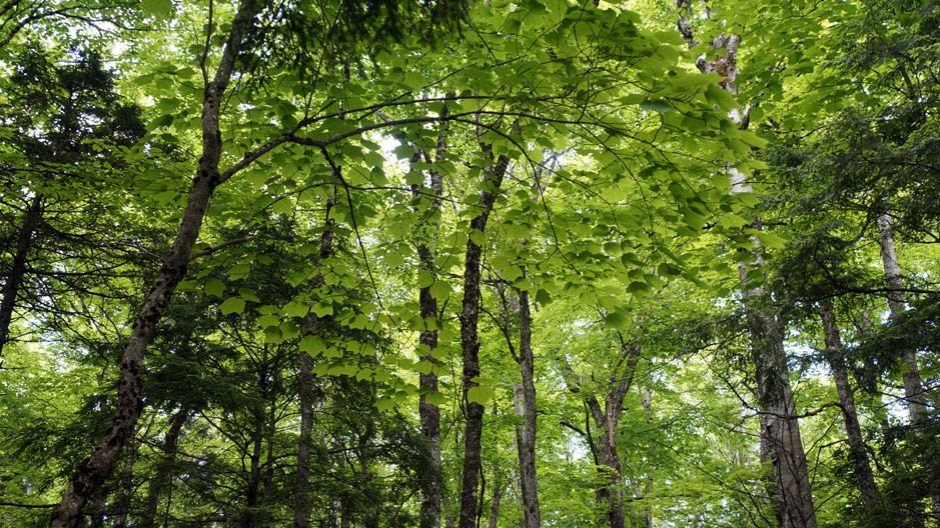
Wrote Nina Newington a few days ago, on day 171 of Camp Now:
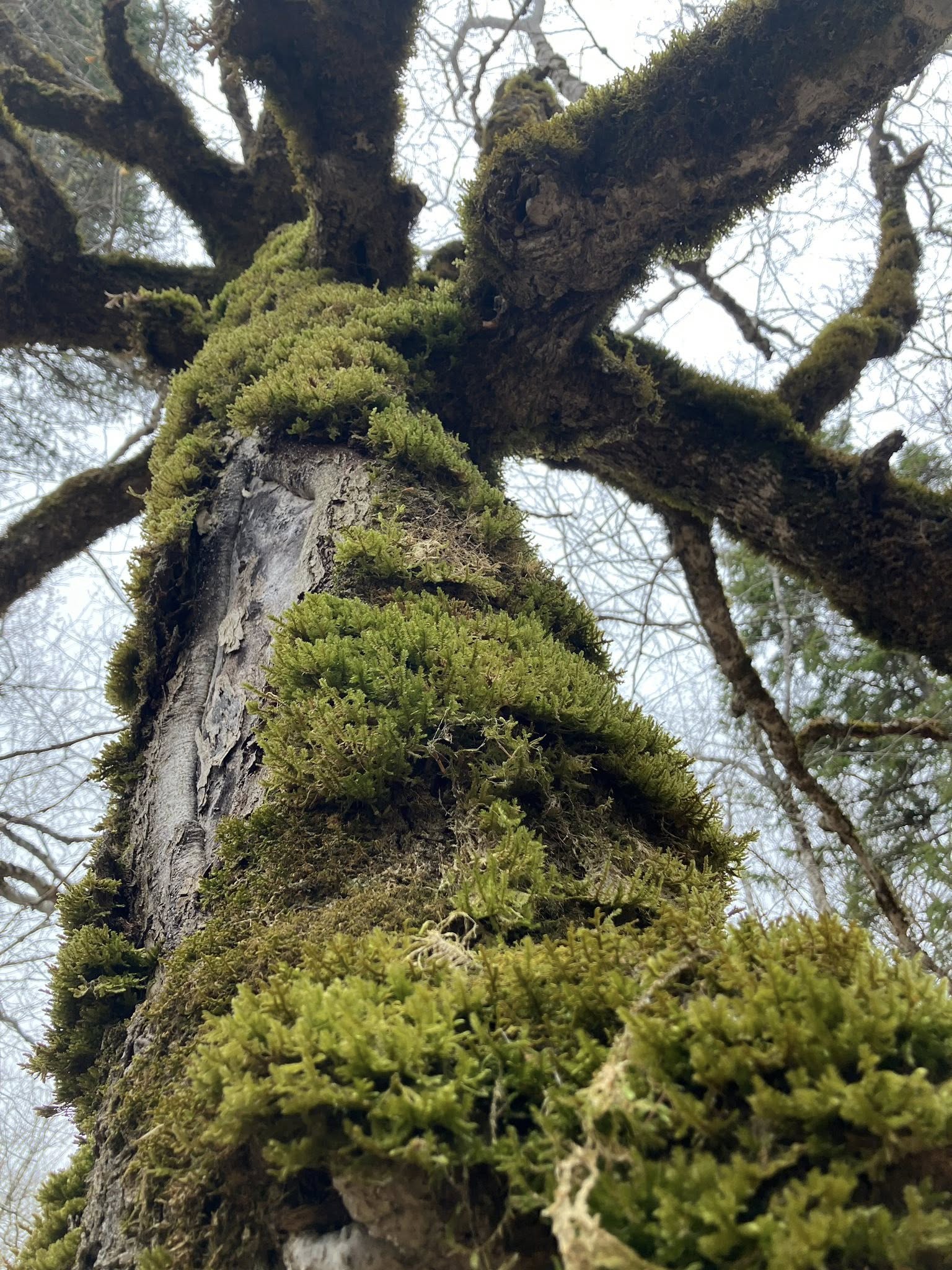
Old Growth Beech on the Corbett Peninsula
On Wednesday the provincial government announced that they are adding 836 ha to Nova Scotia’s Protected Areas, plus they are opening public consultation on protecting another 1,946 ha.
This is good news but it is not very good news. It is good news for the people who raised the money to buy an island on Lambs Lake, near the existing Lambs Lake Nature Reserve and the popular Mickey Hill Provincial Park in Annapolis County.
It took an extraordinarily long time for the province to accept the gift these good people were trying to give the people of Nova Scotia. Now at last the addition of the one hectare island to our Protected Areas is up for comment. Please write in and support this and the other 12 areas up for comment by July 28.
The not good news is that yesterday’s announcement represents miniscule progress. IF all 13 areas that are now up for consultation are permanently protected, the total protected area added by this announcement – 2,782 ha – will move the dial from the current 14.55% to (wait for it) 14.6%. In other words, we still won’t have met the 15% interim target the province agreed to reach by the end of March. As in two months ago.
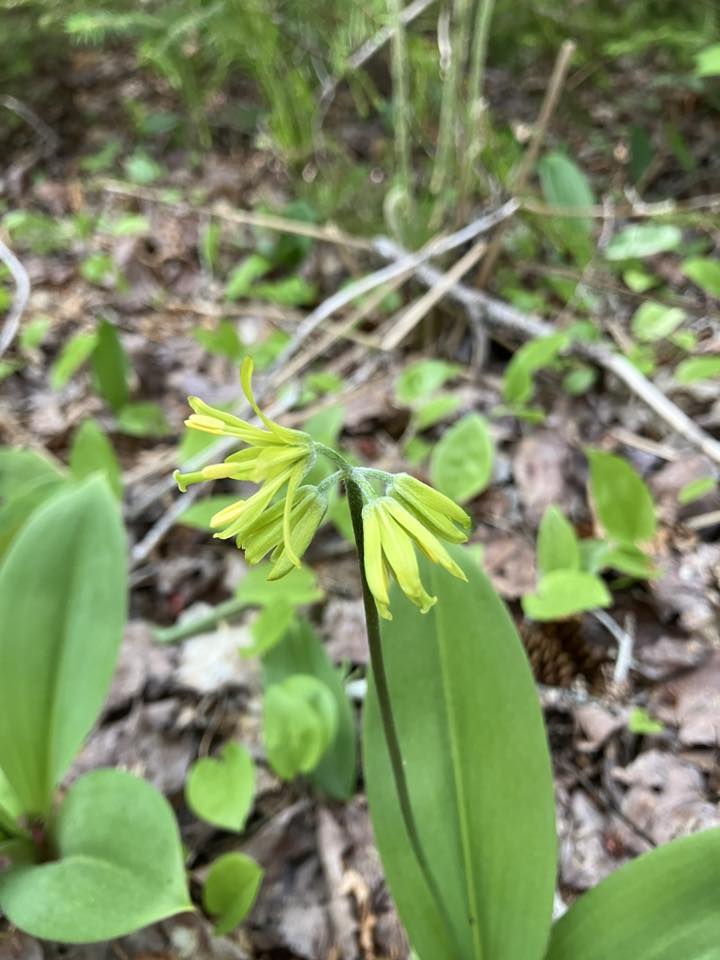
Blue Bead Lily, Clintonia borealis
The semi-good news is that Houston and co have clearly read the recent polls. Including the one that shows that two-thirds of Nova Scotians want to see more areas protected. The government continues to claim that it will meet the target of protecting 20% of our lands and waters by 2030. The now-former Minister of Natural Resources, Kim Masland, recently assured concerned citizens that she was ‘confident’ they would meet that target.
The question is how?
I wish I could say that the government has announced it is opening consultations on community proposed wilderness areas like Chain Lakes, Ingram River and Goldsmith Lake. For a little while last spring, letters to several constituents from our MLA here in Annapolis County, David Bowlby, suggested that Goldsmith was being formally evaluated for protection and the proposal would be open for public consultation. We were elated. But then the spokesperson for the PC caucus announced that MLA Bowlby had made a mistake. The area was not being formally evaluated. There would be no public consultation.
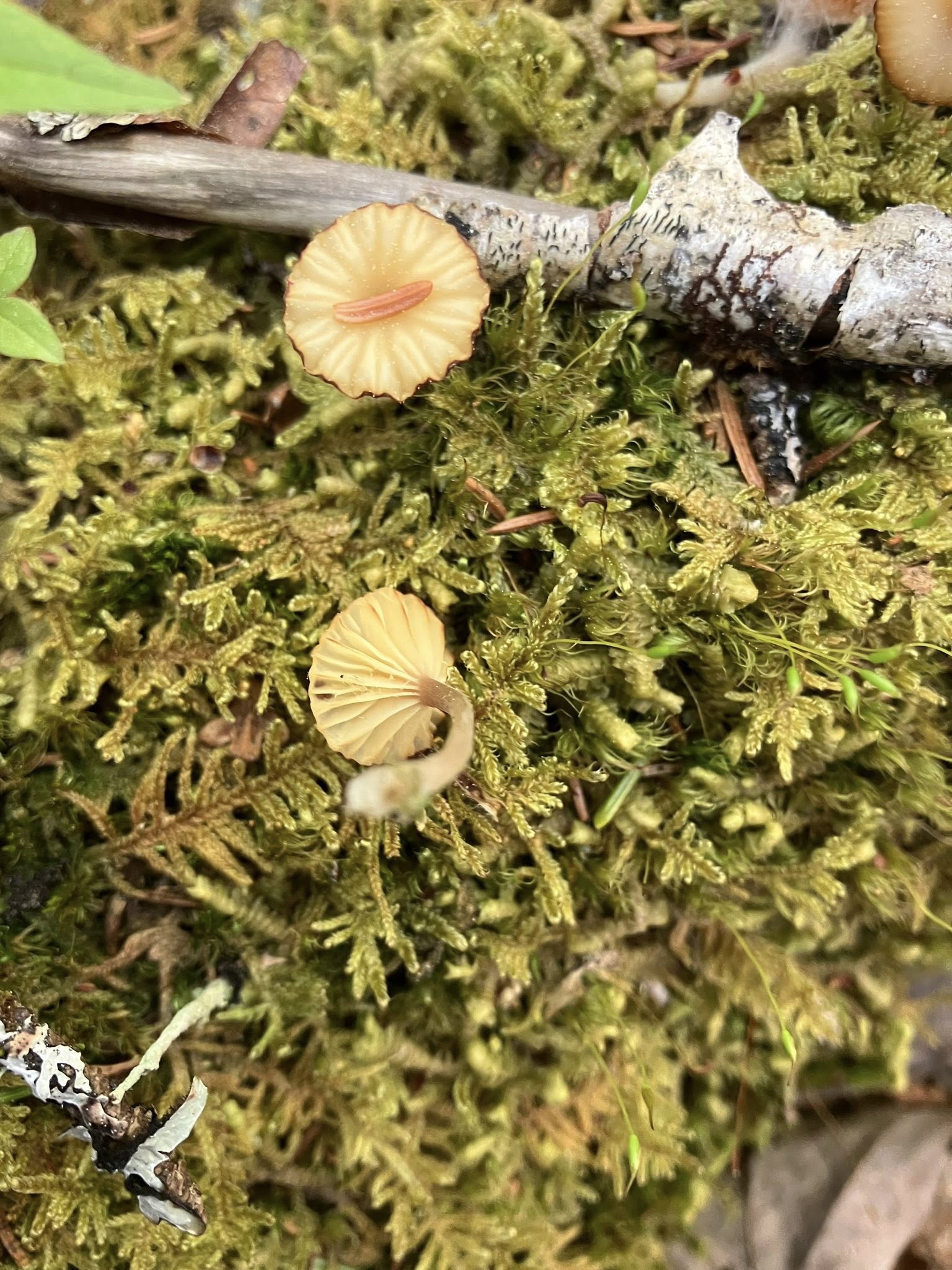
And Who are You?
A year on, with 33 stands of old growth forest now recognized by DNR and a current tally of 138 species at risk occurrences confirmed, the question remains, ‘Why not?’
It may come as news to some of you that, in April, the Houston government did add 148 hectares of the proposed Goldsmith Lake Wilderness Area to the Canadian Protected and Conserved Area Database (CPCAD). You can check it out for yourself.
This Wednesday’s announcement about protecting 2,800 ha was typical for this government: a tiny commitment of land announced with lots of fanfare. April’s announcement of the addition of over 40,000 hectares to Protected Areas – an addition that got us from 13.77% to 14.55% — on the other hand, was low key and, it turns out, inaccurate.
Back then, Minister Halman did not announce any specific areas that had been protected, nor did he announce any public consultations for areas that were being evaluated for permanent protection as Wilderness Areas or Nature Reserves. Instead, he said the areas being added to the tally of protected areas fell under the heading “Other Effective Conservation Measures” (OECMs). This is a far sketchier category, one that, if the forestry industry gets its way, can include any area where they can’t log. Wet areas, steep slopes, stream buffers.
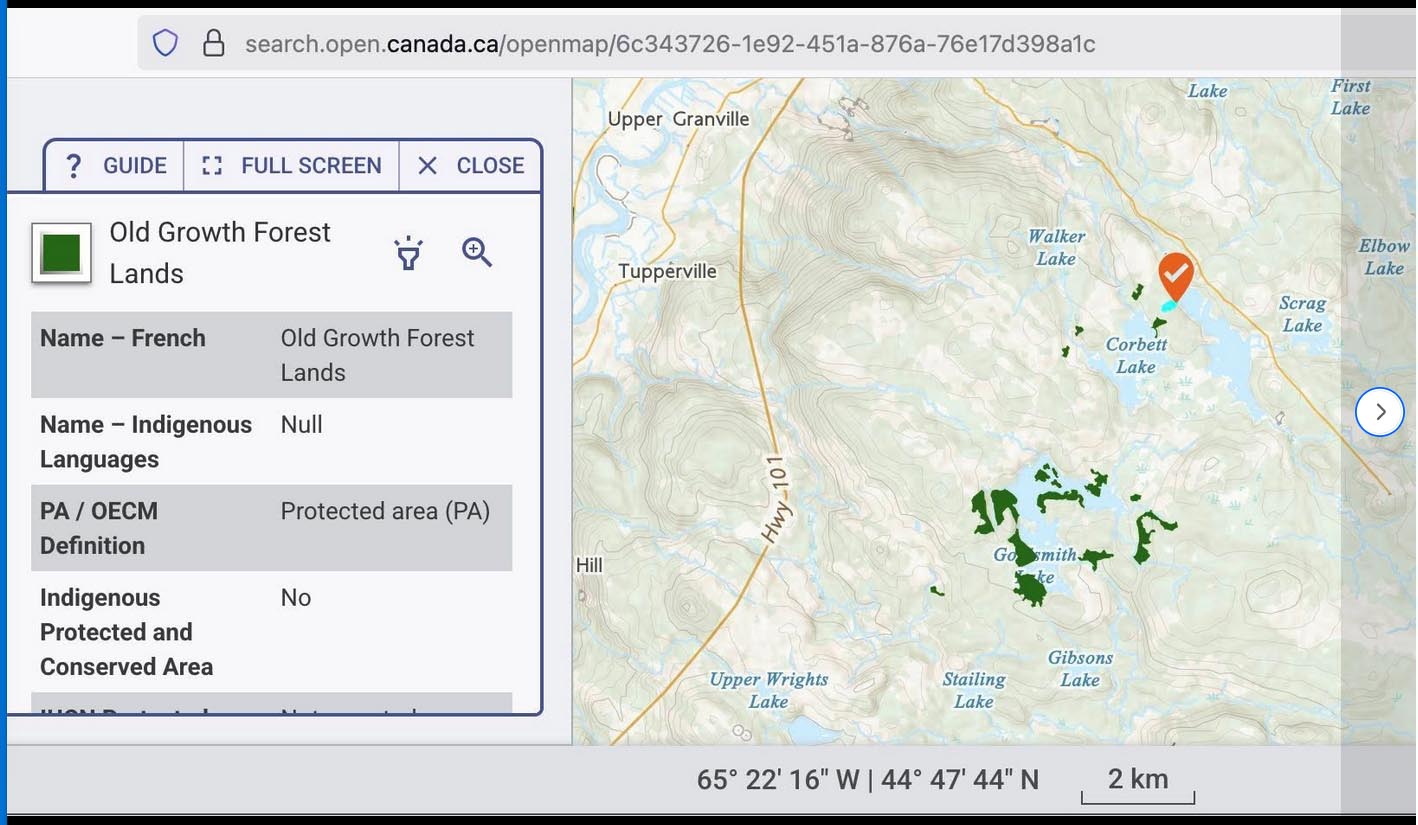
Goldsmith Old Growth stands on the Canadian Protected and Conserved Area Database map
Oddly enough though, when you check the federal map that shows all the protected areas in Canada, it appears that these new additions to Nova Scotia’s Protected Areas weren’t in fact added as OECMs. They are all classed as Protected Areas. Halman, perhaps, had confused himself. Or maybe the staff who briefed him were confused. In any case, a good proportion of the 40,000+ ha in Nova Scotia that had just been counted as Protected Areas were stands that DNR had included in its Old Growth Forest Policy for Nova Scotia.
But just how protected are forests covered by our Old Growth Forest Policy?
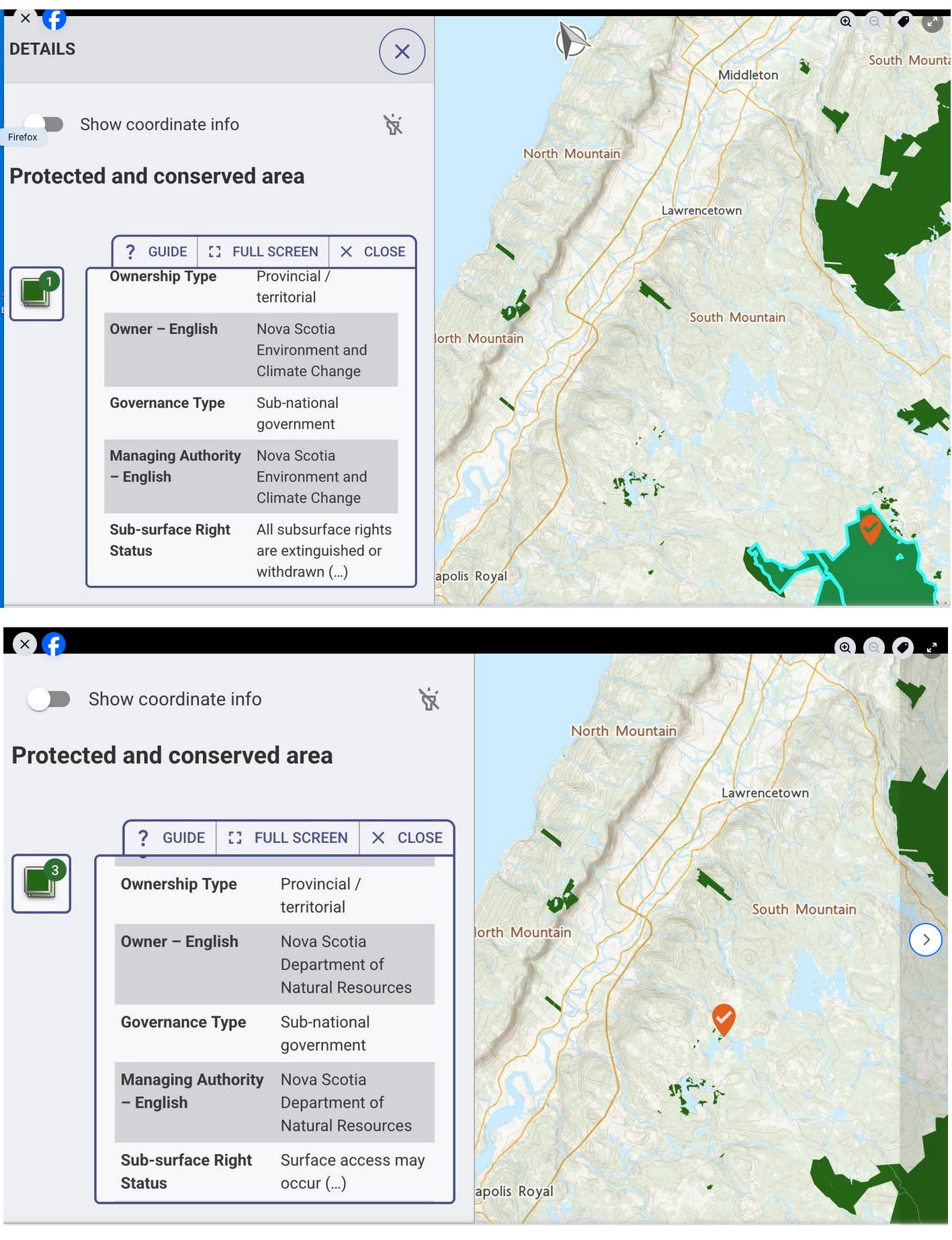
Top: No mining possible in formal Wilderness Areas such as the Medway Lakes just visible here, bottom right Bottom: But what about the supposedly protected Old Growth Forest stands that have been added to Protected Areas? What exactly does ‘Surface access may occur’ mean? If they aren’t fully protected from industrial activity and development, they should not count towards the provincial 20% or the federal 30% targets.
Stands where DNR or its contractors have gone out into the forest and determined that the stands in question meet the criteria for old growth have substantial enough protection under the Old Growth Forest Policy to really qualify as being protected, in the sense that neither DNR staff nor the Minister can just decide to make them available for development or logging after all.
But that is not true for two other categories of forest covered under the policy. There are stands covered by the Old Growth Forest Policy that have never been formally assessed. They appear on the provincial map as “Status Undetermined”.
There are also stands classed as “Old Growth Restoration Opportunities.” These can include young recovering clear-cuts with no pretensions to being old growth. Neither of these two categories has any serious protection under the Old Growth Policy. In spite of this fact, they have been added to the inventory of Protected Areas. They can be used to meet the Protected Areas target even though they are not really protected. On the Canadian Protected and Conserved Area Database map, no distinction is made between these different categories of Old Growth Policy protected forest. They all appear as “Old Growth Forest Lands”.
Of the 34 stands within the proposed Goldsmith Lake Wilderness Area that are covered by Nova Scotia’s Old Growth Policy, 33 have actually been assessed as old growth. As DNR puts it on the Provincial Landscape Map Viewer, “Stand has been confirmed as old growth forest using DNR assessment protocol”. The other one, a 4 ha stand of 43 year old spruce we never asked DNR to assess, shows: “Confirmed as a restoration opportunity using DNR assessment protocol and other data”. So 144 ha of the 148 ha added to the Canadian Protected and Conserved Area Database is really protected. 144 ha of the 3900 ha proposed Goldsmith Lake Wilderness Area. It’s a start.
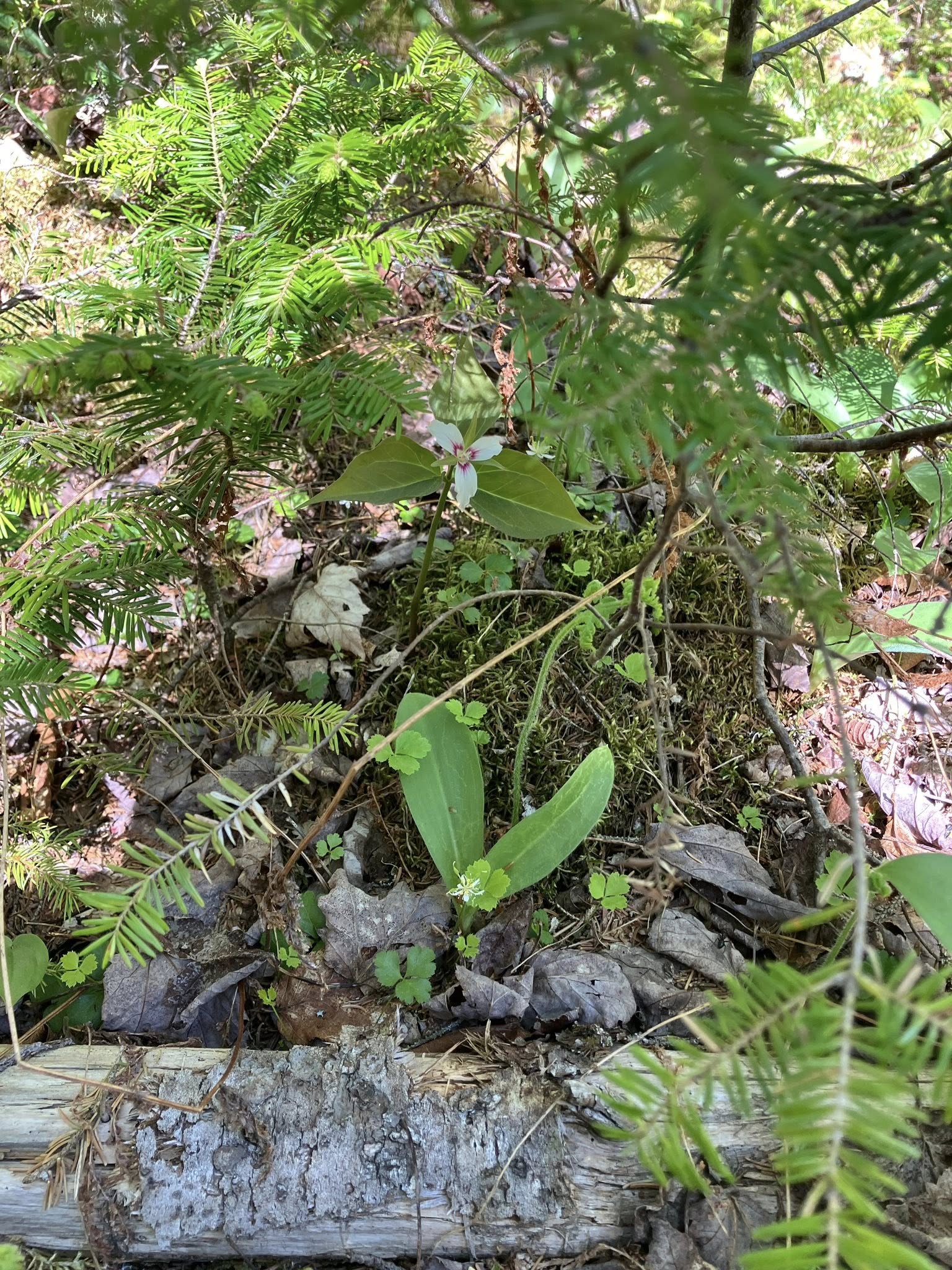
Painted trillium and goldthread
Except there’s another wrinkle, one which I only spotted while writing this post. On the Canadian Protected and Conserved Area Database map, the Subsurface Rights Status for areas of Nova Scotia that have been formally protected as Wilderness Areas or Provincial Parks is consistently given as “All subsurface rights are extinguished or withdrawn (…)” The Subsurface Rights Status for “Old Growth Forest Lands”, on the other hand, states “Surface access may occur (…)” There is no mention of subsurface rights.
Just how protected are old-growth forests that have been assessed as old growth and added to our provincial Protected Areas? What does “Surface access may occur” mean?
What about subsurface rights? Are they ‘extinguished or withdrawn’ when areas are added to the provincial list of Protected Areas? If not, why not? When does protected actually mean protected?
It’s going to take some digging to answer these questions. It’s time for a break in the woods to visit the shivering wildflowers and listen to the valiant birds. The forest goes about its forest business, absorbing carbon, making food and sharing it with the myriad lifeforms that make up the incredible, gorgeous world we live in. Lots of species are devious but I am quite certain that humans are the only species that produces the mounds of bureaucratic obfuscation we just waded through.
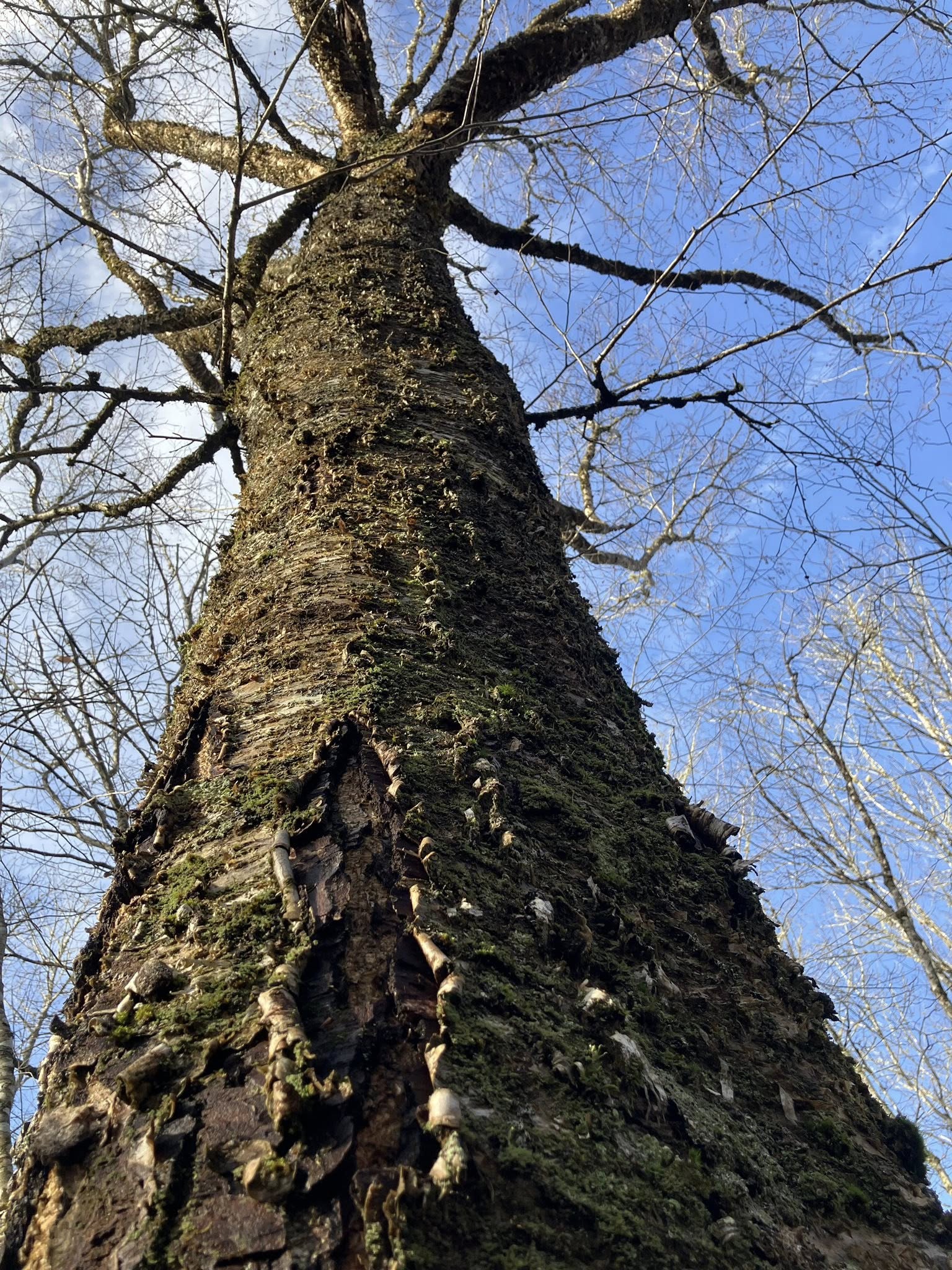
Yellow birch are soooo beautiful.
We are also the only species that is busy destroying forests at scale and rendering the planet unlivable. But not all human societies are as crazy as ours. We need to create a saner system inside the stinking wreckage of our current system. And on the way, we need to save what we can.
If that means plumbing the depths of Old Growth Forest Policy, so be it. The Chimney Swifts and the bats need the big old yellow birch. The martens need the old spruce. The salmon and the trout need the cold streams and the pure, deep lakes. The forests need our help and we need them.
 View March 2026 updated map (low res)