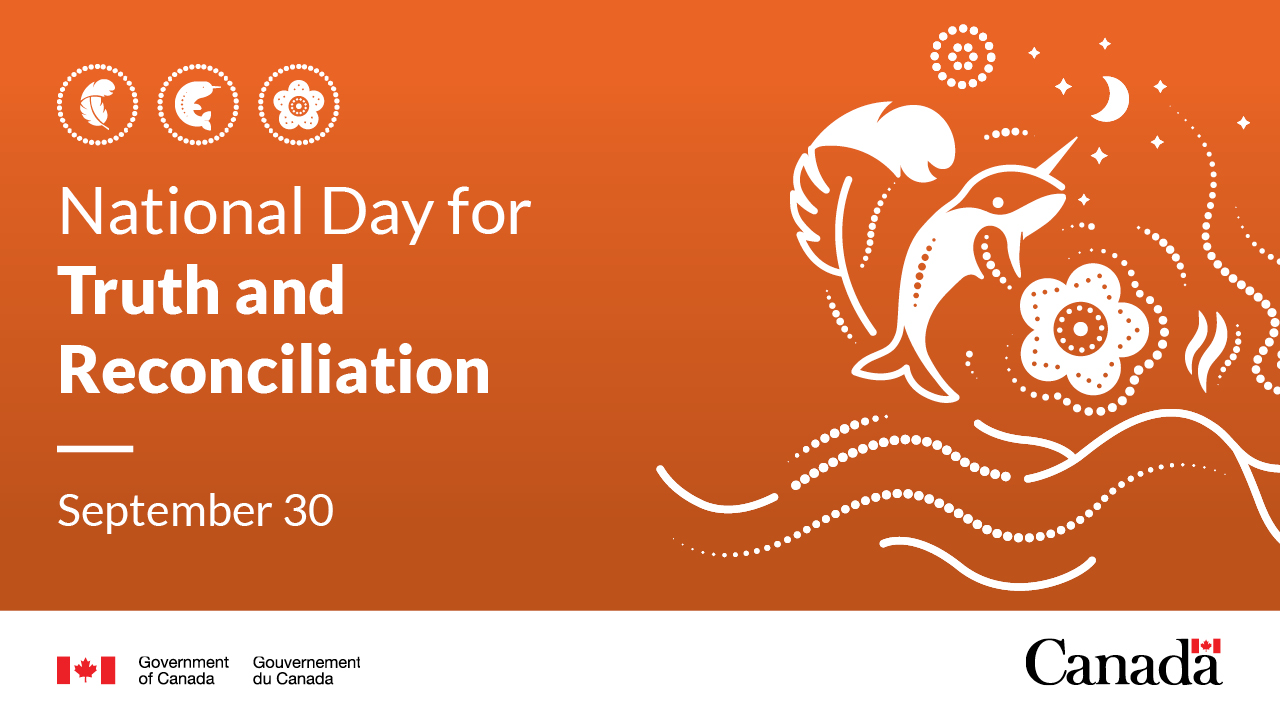
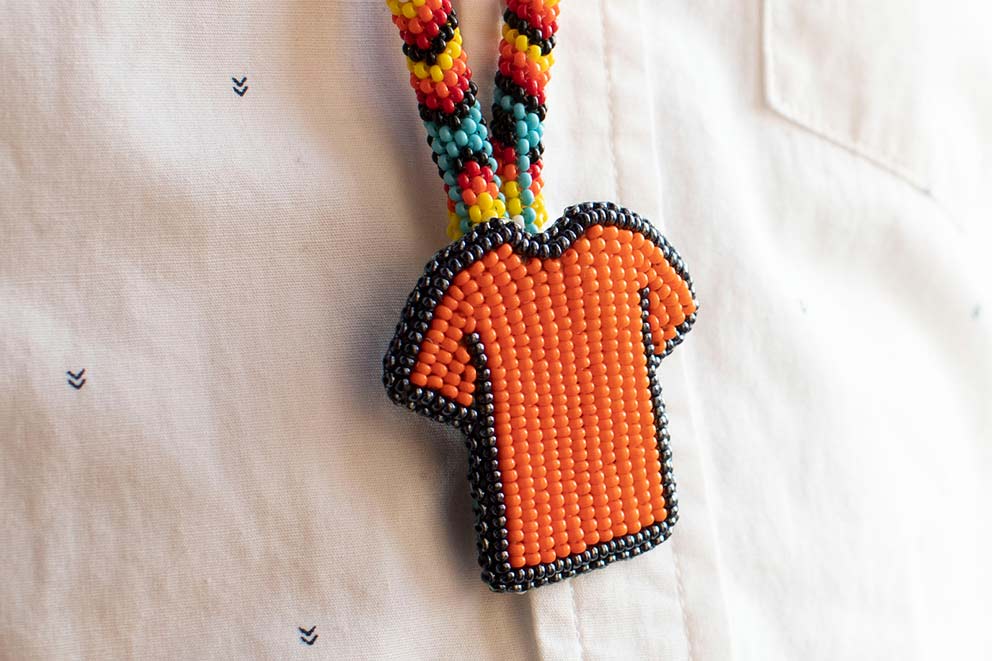
 The feather, a narwhal and a flower represent First Nations, Inuit and Métis. The symbols are surrounded by stars, a crescent moon, rising smoke, dotted patterns and flowing lines representing themes of remembrance and the ongoing journey of reconciliation. “September 30th marks National Day for Truth and Reconciliation and Orange Shirt Day – Every Child Matters “The National Day for Truth and Reconciliation was established in response to Call to Action 80 of the Truth and Reconciliation Commission, which called on the federal government, in collaboration with Indigenous Peoples, to create a statutory holiday recognizing Survivors, their families, and communities while ensuring the history and legacy of residential schools are publicly remembered. Bill C-5, which established the National Day for Truth and Reconciliation as a federal statutory holiday, received Royal Assent on June 3, 2021. “Orange Shirt Day – Every Child Matters began in Williams Lake, British Columbia, on September 30, 2013. Established to honour Residential School Survivors, their families, and those who never returned home, it serves as a powerful reminder of the lasting impacts of the Residential School system. What began as a grassroots initiative has since evolved into a nationally recognized movement, with individuals, organizations, and communities across Canada participating in acts of remembrance, reflection, and reconciliation each year. “The orange shirt symbolizes the loss of culture, freedom, and self-esteem that many Indigenous children experienced. This day reminds us that “Every Child Matters”. “Public commemoration of this tragic chapter in Canada’s history, and its lasting effects, plays an essential role in advancing truth and reconciliation. “On September 30, Canadians are encouraged to wear orange in honour of Residential School Survivors and their families, and in remembrance of the children who never returned home.” SOURCE: Canada.ca |
Related:
 “The [Indigenous Watch Dog] logo is based on a Medicine Wheel circle that represents the balance of all four aspects of our being – spiritual, emotional, physical and mental. In that context, reconciliation requires a balance between the four stakeholders in making reconciliation happen: First Nations, Métis, Inuit and Canada. www.indigenouswatchdog.org ” The mission of Indigenous Watchdog is to deliver relevant quality information on Indigenous issues to educate, inform and ultimately transform the dialogue between Indigenous and non – Indigenous Canadians into ACTION. The main focus is primarily on the Truth and Reconciliation Commission’s 94 Calls to Action. “Ultimately, the main question asked is: “Is Reconciliation advancing or not, and if not – why?“ “By curating and delivering substantive, quality information, Indigenous Watchdog will advance reconciliation with all stakeholder groups through a commitment to transparency, accuracy and independence.” Extracts from “Why is Indigenous “Reconciliation” necessary?” (on the Home Page): “King George III issued the Royal Proclamation in 1763 – 260 years ago. The Proclamation “explicitly stated that Aboriginal title has existed and continues to exist, and that all land would be considered Aboriginal land until ceded by treaty”. In 1764, the Treaty of Niagara, attended by over 2000 Indigenous leaders ratified the Proclamation and established a new alliance between the British and Indigenous people who used their traditional way of representing treaties – the wampum belt…Breaking the treaty didn’t take long. The colonial government determined that in order to secure the land for future settlement and development, the Indigenous population needed to be moved onto reserves where they could be more easily controlled, marginalized and kept out of the way. The Indian Act of 1876 institutionalized Canada’s racist policies by denying to Indigenous people the basic rights that were available to every other Canadian…Canada’s Constitution Act, 1982 Section 35 recognizes and affirms Aboriginal title. The biggest challenge facing Indigenous peoples is the continuous refusal of the federal, provincial and territory governments to recognize and acknowledge this fact.” |
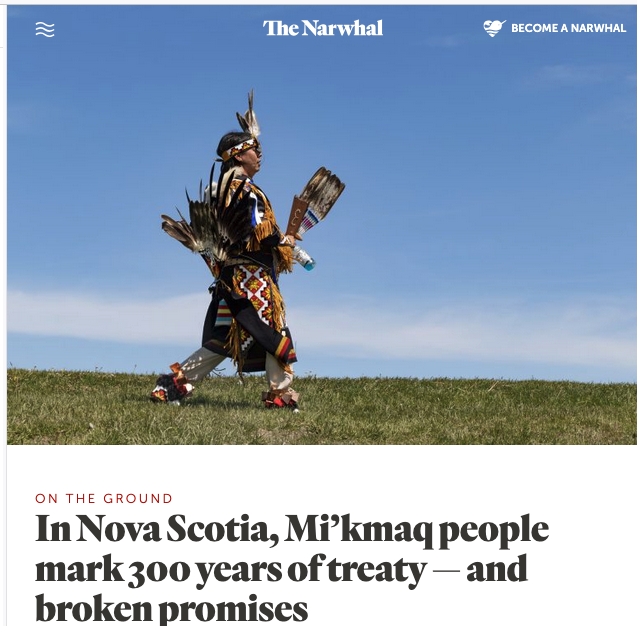 In Nova Scotia, Mi’kmaq people mark 300 years of treaty — and broken promises
Story and photos by Kayla Lambert-MacDonald Jun 12, 2026. “This story is a collaboration between The Narwhal and IndigiNews.””Three centuries after their ancestors signed a treaty with the British Crown, Indigenous people returned to the same grounds, finding joy, grief, pride and an urgent question: When does a promise finally get kept?…Tensions were underscored by the notable absence of Nova Scotia Premier Tim Houston from the Fort Anne celebration. Many in attendance felt that absence was not simply a scheduling matter. It was a statement…Chief Leroy Denny of Eskasoni First Nation, co-chair of the Assembly of Nova Scotia Mi’kmaw Chiefs, said as he stood on the grass, he could feel the weight and power of what happened on the same grounds 300 years ago. “This 300th anniversary is a reminder that these were never land-surrender treaties; they were sacred agreements of peace, coexistence and nation-to-nation relationship building,” Denny said. “Our ancestors envisioned a future of mutual respect, and three hundred years later, these living treaties continue to guide us as we protect our rights and carry their legacy forward for future generations…But Mi’kmaq Grand Council Kji-Keptin (Grand Captain) Antle Denny came to speak plainly about what a 300-year treaty relationship has delivered and what it has not…This month’s commemoration at Fort Anne National Historic Site drew Mi’kmaq leaders, community members, Canadian officials and allies for a day of ceremony, cultural performance and the unveiling of a national historic plaque. ”